
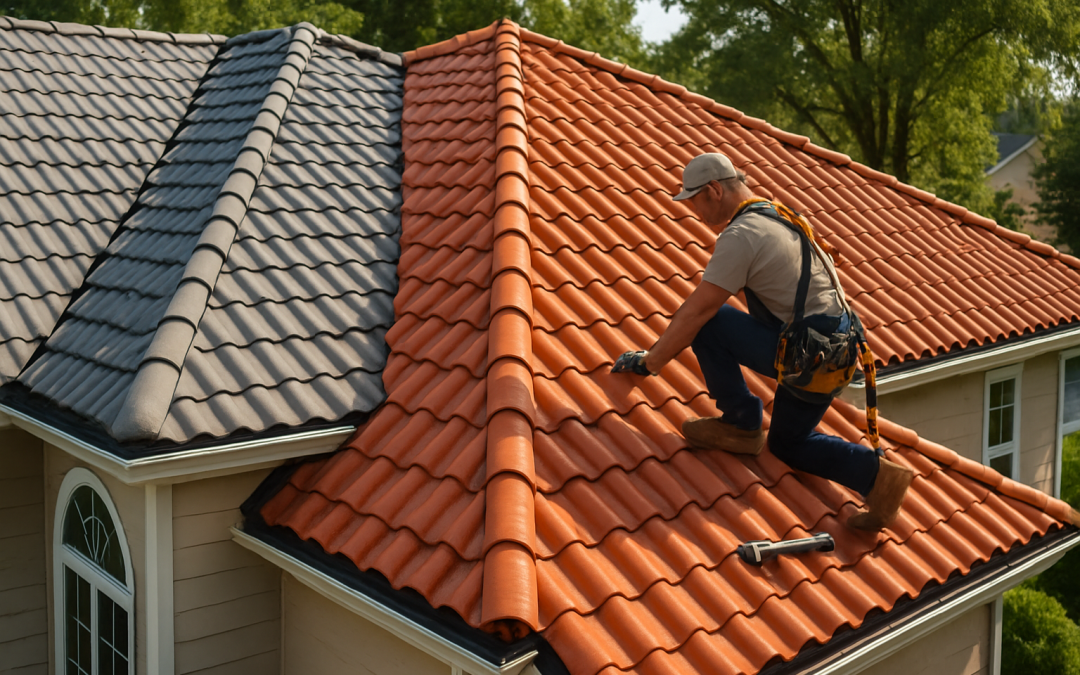
Tile roofing costs in 2026 vary widely, but most homeowners spend $18,000–$45,000+ for a full concrete or clay tile roof replacement, depending on roof size, pitch, and local labor rates. Concrete tile is usually 10–30% cheaper upfront than clay, but clay often lasts longer and holds color better. Repairs to a tile roof can range from $300–$3,000+ depending on how many tiles and how much underlayment are damaged. Exact pricing and whether repair or replacement makes more sense will depend on your roof’s age, storm history, and what a qualified roofing contractor finds during an inspection.
If you’re comparing concrete vs. clay tile roofing costs, you’re likely facing an aging roof, storm damage, or planning a major upgrade. This guide is written for homeowners who want clear, non-technical answers about pricing, installation, and long-term value. We’ll walk through what’s happening on your roof, what you can safely check, when insurance may help, and how to decide between repairing, replacing, or filing a claim.
Table of Contents
- Understanding Tile Roofing: Concrete vs. Clay
- What Tile Roof Problems Usually Mean
- Common Causes of Tile Roof Damage and Leaks
- What You Can Safely Check First
- Signs Your Tile Roof Problem Is Serious
- Tile Roofing Cost in 2026: Concrete vs. Clay
- Repair vs. Replace: Which Makes More Sense?
- Tile Roof Damage and Homeowners Insurance
- How Fast You Need to Act
- Common Mistakes Homeowners Make With Tile Roofs
- How to Decide Your Next Step
- Frequently Asked Questions
- Summary and Next Steps
Understanding Tile Roofing: Concrete vs. Clay
What is a tile roof?
A tile roof is a roofing system made of individual overlapping tiles installed over a waterproof underlayment and roof deck. The tiles themselves shed most of the water, while the underlayment is the hidden waterproof layer that keeps water out of your home. Tile roofing is heavy, durable, and common in warmer climates or higher-end neighborhoods.
Concrete tile vs. clay tile: key differences
Concrete tile:
- Made from cement, sand, and water.
- Usually cheaper than clay tile.
- Heavier than many clay tiles.
- Color is often applied on the surface and can fade over time.
- Typical lifespan: about 40–60 years when properly installed and maintained.
Clay tile:
- Made from natural clay fired at high temperatures.
- More expensive upfront than concrete tile.
- Often lighter than concrete tile but still heavy compared to shingles.
- Color is baked in, so it tends to fade less and keep its appearance longer.
- Typical lifespan: 50–100+ years with proper installation and care.
Why homeowners choose tile roofing
- Long lifespan compared to asphalt shingles.
- Strong resistance to sun, heat, and fire.
- Distinctive appearance that can boost curb appeal and home value.
- Good performance in many storm-prone areas when installed correctly.
The trade-off is higher upfront cost, more complex installation, and the need for a strong roof structure that can support the weight.
What Tile Roof Problems Usually Mean
Common tile roof issues homeowners notice
Most homeowners first realize there’s a tile roof problem when they see:
- Water stains on ceilings or walls.
- Drips or active leaks during heavy rain.
- Loose, cracked, or missing tiles visible from the ground.
- Granules or tile fragments in gutters or on the ground.
- Sagging areas on the roofline or visible dips.
What these signs usually mean
- Ceiling stains or leaks: Often a sign that the underlayment has failed, flashing is damaged, or tiles have shifted, allowing water to reach the deck.
- Cracked or missing tiles: Can expose the underlayment to UV damage and water, speeding up its deterioration.
- Sagging or dips: May indicate structural issues, long-term water damage, or excessive weight from multiple roof layers.
With tile roofs, the visible tiles are only part of the system. Many serious problems start with the underlayment, which you can’t see from the ground.
Common Causes of Tile Roof Damage and Leaks
Age and normal wear
Even if your tiles still look good, the underlayment beneath them has a limited lifespan. In many climates:
- Standard underlayment may last 20–30 years.
- High-quality underlayment can last 30–40+ years.
Once the underlayment ages, cracks, or shrinks, water can work its way under the tiles and into your home, even if the tiles themselves are intact.
Storm and weather damage
- Hail: Can crack tiles, especially clay, and chip edges.
- High winds: May lift or dislodge tiles, especially along ridges and edges.
- Heavy rain: Exploits any weak spots in flashing, valleys, or underlayment.
- Freeze–thaw cycles: In colder climates, water can get into small cracks and expand, breaking tiles over time.
Installation and design issues
- Improper fastening or spacing of tiles.
- Insufficient flashing around chimneys, skylights, or walls.
- Poorly designed valleys where water concentrates.
- Using underlayment not suited to your climate.
These issues may not show up immediately but can lead to leaks years later, especially after major storms.
Foot traffic and other damage
- Walking on tiles can crack them, especially clay tiles.
- HVAC or satellite installers sometimes break tiles while working on the roof.
- Falling branches can crack or dislodge tiles.
What You Can Safely Check First
Do not climb on a tile roof. Tile is slippery, breakable, and the roof is high off the ground. Instead, you can safely check a few things from the ground or a secure window.
Safe visual checks from the ground
- Step back and look for obvious broken, slipped, or missing tiles.
- Check for uneven lines or dips in the roof surface.
- Look at roof edges, ridges, and valleys for gaps or exposed underlayment.
- Inspect around chimneys, skylights, and vents for visible gaps or damaged flashing.
Inside the home
- Look for new or growing ceiling stains, especially after rain.
- Check attic (if safely accessible) for damp insulation, water stains on the underside of the roof deck, or musty smells.
When to stop checking and call a pro
If you see any of the following, it’s time to call a roofing contractor rather than investigate further yourself:
- Active dripping or multiple ceiling stains.
- Visible sagging or bowing in the roofline.
- Large areas of cracked or missing tiles.
- Signs of mold or significant water damage inside.
Signs Your Tile Roof Problem Is Serious
Red flags that suggest major repairs or replacement
- Roof age over 25–30 years with leaks: Often means the underlayment is failing across larger areas, not just in one spot.
- Widespread cracked or loose tiles: Indicates systemic wear or storm damage, not just isolated issues.
- Multiple leak points: Stains in several rooms or along different sections of the roof.
- Rotten wood or structural damage: Found by a contractor during inspection.
- Repeated repairs in the same area: Suggests patching is no longer effective.
When water damage becomes an emergency
Call a contractor promptly if you notice:
- Ceilings bulging or sagging from trapped water.
- Water near electrical fixtures or panels.
- Rapidly spreading stains after each storm.
In these cases, you may need temporary emergency tarping or localized protection while a longer-term repair or replacement plan is made.
Tile Roofing Cost in 2026: Concrete vs. Clay
Typical 2026 cost ranges for tile roof work
Actual prices vary by region, roof size, and complexity, but these ranges are realistic for many U.S. homeowners in 2026:
- Minor tile roof repair: $150–$1,000 (a few broken tiles, small flashing fix, minor leak).
- Moderate tile roof repair: $1,000–$3,000 (multiple tiles, small section of underlayment, valley or flashing work).
- Major tile roof repair: $3,000–$7,000+ (larger underlayment replacement in one area, extensive tile reset).
- Full tile roof replacement: $18,000–$45,000+ for most homes, with high-end or very large roofs exceeding $60,000.
Concrete tile roof cost vs. clay tile roof cost
Concrete tile (full replacement):
- Approx. $10–$20+ per square foot installed, depending on region and complexity.
- Typical total for an average-sized home: roughly $18,000–$35,000+.
Clay tile (full replacement):
- Approx. $12–$25+ per square foot installed.
- Typical total for an average-sized home: roughly $22,000–$45,000+.
Clay tile usually costs more upfront but can offer longer lifespan and better color retention, which may improve long-term value and curb appeal.
What drives tile roofing cost up or down
- Roof size: Larger roofs require more materials and labor.
- Roof pitch and complexity: Steeper roofs and complex designs with many hips, valleys, and penetrations cost more.
- Material choice: Concrete vs. clay, standard vs. premium profiles, and underlayment quality all affect cost. For more detail on how materials change your budget, see how material choice affects roof cost.
- Structural work: If your roof framing needs reinforcement to support tile weight, costs rise significantly.
- Tear-off and disposal: Removing old tile and underlayment is labor-intensive and adds to the bill.
- Local labor and permit costs: High-cost-of-living areas and strict building codes increase overall price.
When costs jump significantly
Expect a noticeable jump in cost when:
- You switch from concrete to premium clay tiles.
- Your roof has multiple stories, very steep slopes, or difficult access.
- There is existing water damage to the deck or structure that must be repaired.
- You upgrade to high-performance underlayment or add insulation/ventilation improvements.
To better understand line items on a roofing quote, you can review guidance on how to read a roofing estimate before you sign anything.
Repair vs. Replace: Which Makes More Sense?
When a tile roof repair is usually enough
Repair is often the better choice when:
- The roof is under 20–25 years old and otherwise in good condition.
- Damage is limited to a small area (for example, a branch impact or a localized leak).
- Underlayment is still in good shape in most areas.
- You have a few cracked or slipped tiles but no widespread issues.
In these cases, a targeted repair in the $150–$3,000 range can extend the life of your existing roof without the cost of full replacement.
When tile roof replacement is the smarter long-term move
Replacement becomes more cost-effective when:
- Your roof is 25–30+ years old and starting to leak in multiple areas.
- Underlayment is failing across large sections, not just in one spot.
- Repairs are becoming frequent and expensive.
- There is significant hidden damage to the deck or structure.
- You want to upgrade from concrete to clay or improve energy efficiency and curb appeal.
Spending $3,000–$7,000+ every few years on major repairs can quickly approach the cost of a full replacement that will last decades.
Concrete vs. clay: long-term value comparison
- Concrete tile: Lower upfront cost, good durability, but may fade more and have a slightly shorter lifespan.
- Clay tile: Higher upfront cost, excellent longevity, better color stability, and often better resale appeal.
If you plan to stay in the home long-term and your structure can support it, clay tile can offer better lifetime value despite the higher initial price. If budget is tight or you may move within 10–15 years, concrete tile may be the more practical choice.
Is repair ever “not worth it”?
Repair is often not worth it when:
- The roof is near or past its expected lifespan.
- Multiple contractors tell you the underlayment is failing in many areas.
- You have recurring leaks despite previous repairs.
- The cost of a major repair is more than 25–30% of a full replacement estimate.
Tile Roof Damage and Homeowners Insurance
When insurance may cover tile roof damage
Homeowners insurance typically helps with sudden, accidental damage, not normal wear and tear. You may have coverage if:
- A storm with high winds or hail cracked or dislodged tiles.
- A fallen tree or large branch damaged part of the roof.
- Debris from a storm punctured or broke tiles.
Insurance usually does not pay to replace an old roof simply because it has reached the end of its lifespan or the underlayment has worn out.
How to approach a potential claim
- Document the date and time of the storm or event.
- Take clear photos from the ground of visible damage and any interior leaks.
- Contact a reputable roofing contractor for an inspection and written report.
- Call your insurance company to ask about coverage and your deductible before filing a formal claim.
Common mistakes that lead to claim denials
- Waiting too long to report damage after a storm.
- Not having clear documentation or photos.
- Letting temporary damage worsen because no action was taken.
- Assuming all roof issues are covered, even if they’re due to age or poor maintenance.
Working with adjusters and contractors
It’s often helpful to have your roofing contractor present when the insurance adjuster inspects the roof. The contractor can:
- Point out damage that might be missed.
- Explain what repairs or replacement are actually needed.
- Provide a detailed estimate that matches real-world costs.
Be cautious about signing over your entire claim or benefits to any contractor without understanding the agreement.
How Fast You Need to Act
Situations that require urgent action (within days)
- Active leaks during or after rain.
- Ceiling bulging, sagging, or cracking from water.
- Water near electrical fixtures or wiring.
- Large areas of missing or displaced tiles after a storm.
In these cases, call a roofing contractor right away. They may install temporary protection (like tarping) to prevent further damage while a permanent solution is planned.
Situations where you have some time (weeks to a few months)
- Isolated ceiling stains that are not growing quickly.
- A few cracked or chipped tiles with no active leaks.
- An older roof that’s nearing the end of its life but not yet leaking.
You still shouldn’t delay too long, but you can use this time to gather multiple quotes, compare concrete vs. clay options, and plan your budget.
Planning for replacement
For a full tile roof replacement, expect:
- 1–3 weeks from contract signing to start date, depending on contractor schedule and material availability.
- Several days to a few weeks of on-site work, depending on roof size and complexity.
Scheduling during off-peak seasons can sometimes help with availability and pricing; see guidance on what time of year is the cheapest to replace a roof for more detail.
Common Mistakes Homeowners Make With Tile Roofs
Underestimating underlayment
Many homeowners focus on the visible tiles and ignore the underlayment. A roof can look fine from the street while the underlayment is failing underneath. Ignoring early leaks or stains can turn a manageable repair into a major replacement with structural damage.
Walking on the roof
- Walking on tile can crack or break tiles, especially clay.
- DIY inspections or gutter cleaning from the roof often cause more damage than they prevent.
Always leave roof access and tile replacement to trained professionals with the right equipment.
Choosing the cheapest bid without context
The lowest estimate is not always the best value. It may reflect:
- Lower-quality underlayment or materials.
- Inexperienced installers.
- Skipping important details like flashing or ventilation.
To protect your budget, it helps to understand how to avoid overpaying for a roof and why some roofers charge more than others.
Delaying needed work
Putting off repairs or replacement can lead to:
- Mold growth inside walls and ceilings.
- Rotten roof decking and structural framing.
- Higher repair costs and potential insurance complications.
How to Decide Your Next Step
Step 1: Assess urgency
- Emergency: Active leaks, ceiling damage, or major storm damage → Call a roofing contractor immediately for inspection and temporary protection.
- Non-emergency but concerning: Visible damage or stains without active leaks → Schedule an inspection within the next few weeks.
Step 2: Get a professional inspection
Ask the contractor to clearly explain:
- The condition of both tiles and underlayment.
- Whether damage is localized or widespread.
- Estimated remaining life of the existing system.
- Concrete vs. clay options and cost differences for your roof.
Step 3: Compare repair vs. replacement
Use these guidelines:
- If the roof is relatively young and damage is limited → Repair is often best.
- If the roof is older (25–30+ years) with multiple issues → Replacement usually offers better long-term value.
- If a major repair is more than 25–30% of replacement cost → Strongly consider full replacement.
Step 4: Decide on concrete vs. clay
- Choose concrete tile if: Budget is a primary concern, you want a durable tile roof, and you’re comfortable with a slightly shorter lifespan.
- Choose clay tile if: You plan to stay long-term, value appearance and color retention, and can afford the higher upfront cost.
Step 5: Get multiple quotes
Obtain at least 2–3 written estimates from reputable, licensed roofing contractors. Make sure each quote clearly lists:
- Tile type (concrete or clay), brand, and profile.
- Underlayment type and thickness.
- Scope of tear-off, deck repair, and flashing work.
- Labor, materials, permits, and disposal costs.
Frequently Asked Questions
How much does a tile roof cost in 2026 compared to shingles?
In 2026, a tile roof typically costs several times more than an asphalt shingle roof. While many shingle roofs fall in the $5,000–$15,000+ range, tile roofs often range from $18,000–$45,000+ depending on size, material, and complexity. The trade-off is a much longer expected lifespan and higher curb appeal.
Is concrete or clay tile better for my roof?
Concrete tile is usually better if you want a tile roof at a lower upfront cost and are comfortable with a 40–60-year lifespan. Clay tile is better if you prioritize maximum longevity, color stability, and premium appearance, and you’re willing to invest more initially. Your roof structure and local climate also play a role, so a contractor’s evaluation is important.
Can I replace just the broken tiles instead of the whole roof?
Yes, if the damage is limited and the underlayment is still in good condition, replacing only the broken tiles is often a cost-effective solution. However, if your roof is older and leaks are recurring, simply swapping tiles may not address underlying underlayment problems.
Will homeowners insurance pay for a new tile roof?
Insurance may pay for part or all of a new tile roof if the damage is from a covered event like hail, wind, or a fallen tree. It usually will not cover replacement due to age, wear and tear, or poor maintenance. Your coverage, deductible, and the adjuster’s findings will determine how much the policy pays.
How long does it take to install a new tile roof?
Most tile roof replacements take several days to a few weeks of on-site work, depending on roof size, complexity, and weather. The total timeline from first inspection to completed roof can be a few weeks, especially if permits and material ordering are involved.
Is a tile roof worth the higher cost?
For many homeowners, a tile roof is worth the higher upfront cost because of its long lifespan, fire resistance, and curb appeal. If you plan to stay in your home long-term and your structure can support tile, the lifetime cost per year of service can be competitive with cheaper materials that need more frequent replacement.
Summary and Next Steps
In 2026, concrete tile roofs typically cost less upfront than clay but may have a shorter lifespan and more visible fading over time. Clay tile costs more initially but often delivers better long-term value, appearance, and durability. Whether you should repair or replace depends mainly on your roof’s age, the condition of the underlayment, and how widespread the damage is.
If you’re seeing leaks, stains, or visible tile damage, your next step is to schedule a professional roof inspection and get clear, written estimates for both repair and replacement options. Compare at least two quotes, ask detailed questions about materials and underlayment, and consider both your budget and how long you plan to stay in the home.
Acting quickly when you notice problems can prevent more serious structural damage and higher costs later. A qualified roofing contractor can help you decide whether a targeted repair, a full concrete or clay tile replacement, or an insurance claim is the best move for your situation.