
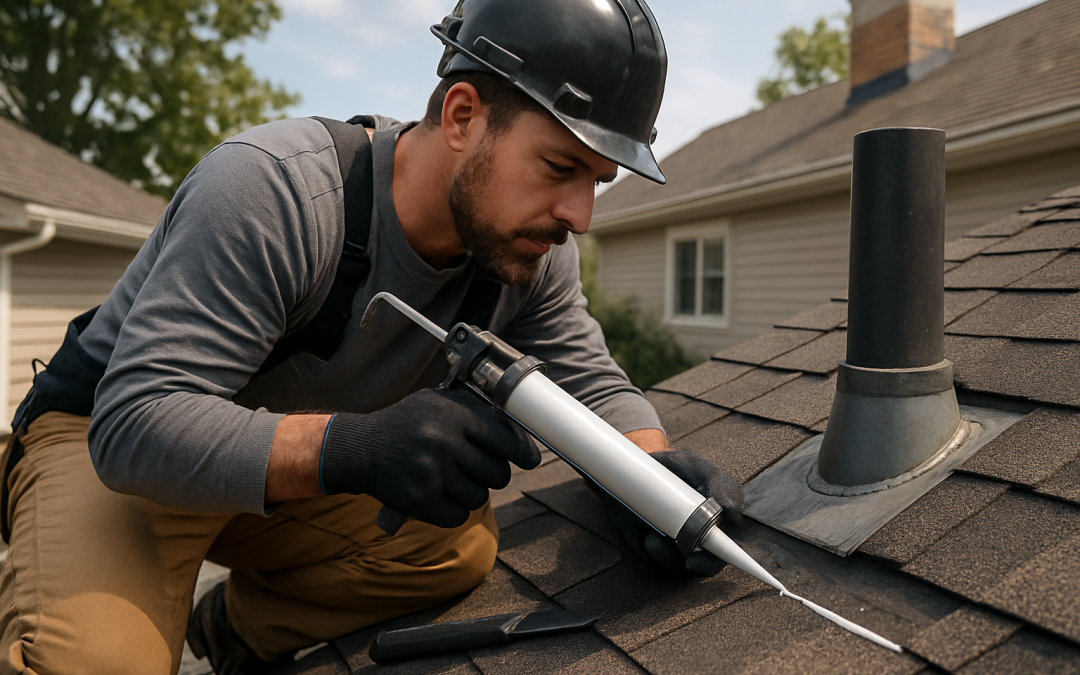
Roof repair sealant is a product used to temporarily stop or prevent roof leaks by sealing small gaps, cracks, and seams. It can be a smart short-term fix for minor issues, but it will not solve serious roof damage or replace worn-out shingles or roofing materials. Most homeowners spend anywhere from $20–$150 on sealant itself, but the real cost comes if leaks are not properly diagnosed and lead to larger repairs of $1,000–$7,000+. Sealant is best used as part of a broader repair plan, ideally after a professional has inspected the roof and confirmed the leak source.
If you are seeing water stains on ceilings, drips during rain, or damp attic insulation, you may be wondering if a tube or bucket of roof sealant can save you from a big roofing bill. This guide is for homeowners who want to understand when sealant makes sense, when it is a waste of money, and when it is time to call a roofing contractor or even consider a full roof replacement. We will walk through types of sealants, costs, insurance considerations, and how to decide your next step calmly and confidently.
Table of Contents
- What Is Roof Repair Sealant?
- Best Types of Roof Repair Sealant and Where They Are Used
- What to Check First When You Notice a Leak
- Signs Your Roof Problem Is More Serious Than Sealant
- When Roof Damage and Sealant-Related Repairs May Be Covered by Insurance
- Roof Repair Sealant Costs vs. Roof Repair and Replacement Costs
- Roof Sealant vs. Roof Replacement: How to Decide
- How Fast You Need to Act on Roof Leaks
- Common Mistakes Homeowners Make With Roof Sealant
- How to Choose the Right Roof Repair Sealant
- Frequently Asked Questions
- Summary: What to Do Next
What Is Roof Repair Sealant?
Roof repair sealant is a flexible, waterproof material designed to seal small openings on your roof system. It is commonly used around flashing, vents, skylights, nail holes, and small cracks where water can sneak in.
Sealants come in tubes (like caulk), cans, or buckets and are applied with a caulk gun, brush, trowel, or roller. Some are made for specific materials like asphalt shingles, metal roofs, or flat roofs, while others are more general-purpose.
What Roof Sealant Can and Cannot Do
Roof sealant can:
- Help stop minor leaks around penetrations (vents, pipes, chimneys).
- Seal small cracks or gaps in flashing and seams.
- Extend the life of an aging roof for a short period.
- Provide an emergency patch until a roofer can perform a proper repair.
Roof sealant cannot:
- Fix widespread shingle damage, curling, or missing shingles.
- Correct structural problems, sagging, or rotten decking.
- Replace a roof that is at the end of its lifespan.
- Guarantee a long-term solution if the leak source is misdiagnosed.
Common Situations Where Homeowners Consider Sealant
- Water stains suddenly appear on a ceiling after a storm.
- A slow drip shows up around a bathroom vent or kitchen exhaust fan.
- You notice damp insulation or a musty smell in the attic.
- An older roof starts leaking in one small area, but a full replacement feels too expensive right now.
Best Types of Roof Repair Sealant and Where They Are Used
Not all roof sealants are the same. Choosing the wrong type can lead to peeling, cracking, or continued leaks. Below are the main categories you will see at home centers and what they are typically used for.
1. Asphalt Roof Sealant
Best for: Asphalt shingle roofs, flashing, small cracks, nail holes.
Asphalt-based sealants are dark, sticky, and designed to bond well with asphalt shingles and metal flashing. They are often used around chimneys, step flashing, and exposed nail heads.
- Pros: Inexpensive, widely available, good adhesion to shingles and metal.
- Cons: Can dry out and crack over time; not ideal for very flexible areas or some modern roofing materials.
2. Polyurethane Roof Sealant
Best for: Metal roofs, flashing, gutters, and areas needing strong adhesion.
Polyurethane sealants are tough and flexible, with excellent adhesion to many surfaces including metal, wood, and masonry.
- Pros: Durable, flexible, strong bond, good for movement-prone areas.
- Cons: Typically more expensive; may require careful surface prep.
3. Silicone Roof Sealant and Coatings
Best for: Flat roofs, ponding water areas, some metal and single-ply roofs.
Silicone sealants and coatings are highly waterproof and UV resistant. They are often used on flat or low-slope roofs where water may sit longer.
- Pros: Excellent water resistance, long-lasting, handles standing water better than many other types.
- Cons: Can be slippery; not always compatible with other products; more difficult to paint over or recoat with non-silicone products.
4. Acrylic Roof Coatings
Best for: Reflective coatings on flat or low-slope roofs, extending life of some existing roofs.
Acrylic coatings are often used as a “roof paint” to protect and reflect sunlight, reducing heat and slowing wear.
- Pros: Good UV resistance, can improve energy efficiency, often white and reflective.
- Cons: Not ideal for areas with standing water; more of a coating than a crack-filling sealant.
5. Butyl Rubber and Tape Sealants
Best for: Seams on metal roofs, RV roofs, and some flashing details.
Butyl products come as caulks or tapes and are very sticky and flexible, making them useful for sealing seams and overlaps.
- Pros: Excellent for seams, flexible, good for metal and some membranes.
- Cons: Not a full-roof solution; can be messy; must be applied carefully to clean surfaces.
6. Roof Patch Products (Cement + Fabric)
Best for: Small punctures, cracks, or localized damage on flat roofs.
These are usually thicker products sometimes reinforced with fabric or mesh to create a small patch over a damaged area.
- Pros: Strong localized repair when used correctly; good for small punctures.
- Cons: Not a substitute for replacing damaged sections or membranes; improper use can trap moisture.
What to Check First When You Notice a Leak
Before you buy roof sealant, it is important to understand where the water is actually coming from. Many leaks show up far from the real problem area.
Safe Visual Checks Inside the Home
Stay off the roof. You can gather useful information from inside your home and from the ground.
- Look at ceilings and upper walls for water stains, bubbling paint, or discoloration.
- Check around light fixtures, bathroom fans, and ceiling vents for dampness.
- If safe, peek into the attic with a flashlight during or right after rain:
- Look for wet insulation, darkened wood, or active drips.
- Note if the moisture is near a vent pipe, chimney, or valley.
- From the ground, scan the roof for:
- Missing, cracked, or curled shingles.
- Loose or rusted flashing around chimneys and vents.
- Debris buildup in valleys or gutters.
Questions to Ask Yourself Before Using Sealant
- Is the leak clearly coming from one small area (like around a vent) or is it widespread?
- Is your roof near or past its typical lifespan (15–30 years for many asphalt shingle roofs)?
- Did the leak start after a specific storm event (hail, high wind, heavy rain)?
- Have you had multiple leaks in different parts of the roof over the last few years?
If the leak is localized and your roof is otherwise in good shape, a targeted repair (which may include sealant) could be reasonable. If the roof is old or multiple areas are leaking, sealant alone is unlikely to solve the real problem.
Signs Your Roof Problem Is More Serious Than Sealant
Some roof issues are too serious for a tube of sealant and require professional repair or replacement. Ignoring these signs can lead to mold, structural damage, and much higher costs later.
Red Flags That Point to Major Roof Damage
- Multiple leaks in different rooms or areas of the house.
- Repeated leaks in the same spot even after previous patching or sealant.
- Visible sagging in the roofline or ceiling.
- Soft or spongy spots in the attic or on the roof deck (if a professional checks it).
- Widespread shingle damage – curling, cracking, granule loss, or many missing shingles.
- Rotten wood around eaves, fascia, or in the attic.
- Mold or mildew on ceilings, walls, or in the attic.
When Sealant Can Make Things Worse
- Sealing over wet or rotten materials can trap moisture and accelerate rot.
- Heavy use of sealant can hide the real issue, making future diagnosis harder.
- Improper sealant on metal or specialty roofs can interfere with expansion and contraction, causing new leaks.
If you see any of these serious signs, you should treat the situation as a roof repair or replacement issue, not a simple sealant project. A professional inspection is strongly recommended.
When Roof Damage and Sealant-Related Repairs May Be Covered by Insurance
Homeowners insurance usually does not pay for general wear and tear or old roofs, but it may cover sudden damage from storms or accidents. Understanding this can help you decide whether to pay out of pocket for sealant or file a claim for a larger repair or replacement.
Damage Types That May Be Covered
Policies vary, but insurance may cover roof damage caused by:
- Hail storms that bruise, crack, or break shingles or tiles.
- High winds that tear off shingles, flashing, or sections of the roof.
- Falling objects, such as tree limbs or debris.
- Sudden accidental events, like fire or certain types of water damage.
Insurance usually does not cover leaks caused by age, lack of maintenance, or long-term deterioration. For a deeper overview of what policies typically cover, see what insurance covers for roof damage.
How Sealant Fits Into an Insurance Claim
- Using sealant as a temporary emergency measure to stop active leaking is usually fine.
- Do not attempt major DIY repairs that alter or hide the damage before an adjuster inspects it.
- Document the leak with photos and videos before any temporary sealing.
- Keep receipts for any emergency materials or professional emergency tarping or sealing.
Common Insurance Claim Mistakes
- Waiting too long to report storm damage, missing the claim window.
- Failing to document the condition of the roof and interior damage.
- Letting a contractor “create” damage or overuse sealant to exaggerate issues.
- Accepting the first settlement offer without comparing it to contractor estimates.
If you suspect storm-related damage, it is often better to contact a reputable roofing contractor and your insurance company before relying on sealant as your main solution.
Roof Repair Sealant Costs vs. Roof Repair and Replacement Costs
Sealant itself is relatively inexpensive, but the real financial question is whether you are delaying an inevitable larger repair or replacement. Understanding cost ranges helps you make a smarter decision.
Typical Roof Sealant Product Costs
- Small tubes of roof sealant or caulk: $5–$20 each.
- One-gallon buckets of roof patch or coating: $25–$80.
- Larger buckets (5 gallons) of roof coating: $100–$300+, depending on type and quality.
For a small DIY patch, you might spend under $100 on materials. However, if the leak is a symptom of larger problems, that “cheap fix” can lead to much higher costs later.
Roof Repair Cost Ranges
Actual repair costs depend on roof size, material, pitch, access, and local labor rates, but these are common ranges:
- Minor roof repair: $150–$1,000
- Examples: Replacing a few shingles, resealing flashing, fixing a small leak around a vent.
- Moderate repair: $1,000–$3,000
- Examples: Repairing a larger section of shingles, replacing damaged flashing and underlayment, fixing multiple small leaks.
- Major repair: $3,000–$7,000+
- Examples: Structural repairs, replacing large sections of decking, extensive water damage remediation.
Full Roof Replacement Cost Ranges
When a roof is near the end of its life or has widespread damage, replacement is often more cost-effective than repeated repairs and sealant patches.
- Typical full roof replacement: $5,000–$15,000+ for many homes.
- Larger or more complex roofs, premium materials (like tile or metal), or high-cost areas can easily exceed $20,000+.
For a more detailed breakdown by home size, see the guide on how much it costs to re-roof a 2000 sq ft house.
When Repair or Replacement Is More Cost-Effective Than Sealant
- If you are applying sealant to the same area more than once, it is usually time for a proper repair.
- If your roof is 15–25+ years old and leaking in multiple spots, replacement often saves money over repeated patching.
- If storm damage is involved and insurance may help, a full repair or replacement can be far more affordable than you expect.
Roof Sealant vs. Roof Replacement: How to Decide
Deciding between using sealant, scheduling a repair, filing an insurance claim, or replacing the roof can feel overwhelming. Breaking it into simple scenarios can help.
Scenario 1: Newer Roof, Single Small Leak
- Roof age: Under 10–12 years, generally in good condition.
- Issue: One small leak near a vent, pipe, or chimney after heavy rain.
- Best approach:
- Have a roofer inspect to confirm the source.
- A targeted repair (resealing flashing, replacing a few shingles) is usually better than just adding sealant.
- Sealant may be part of the repair, but not the only solution.
Scenario 2: Mid-Life Roof, Occasional Leaks
- Roof age: 10–20 years, some wear but not failing everywhere.
- Issue: Intermittent leaks in one or two areas, often during heavy storms.
- Best approach:
- Get a professional inspection to assess overall condition.
- Moderate repairs may extend roof life by several years.
- Consider budgeting for replacement in the near future.
Scenario 3: Old Roof, Multiple Leaks, Visible Wear
- Roof age: 20+ years for asphalt shingles (or near end-of-life for your material).
- Issue: Multiple leaks, widespread curling or missing shingles, granules in gutters.
- Best approach:
- Sealant is unlikely to be cost-effective or reliable.
- Request quotes for full replacement and ask about financing or phased options.
- Check if any recent storm damage might qualify for an insurance claim.
Scenario 4: Storm Damage (Hail, Wind, Falling Branches)
- Roof age: Any age.
- Issue: Damage clearly tied to a specific storm event.
- Best approach:
- Document damage and interior leaks with photos.
- Contact your insurance company and a trusted roofing contractor.
- Use sealant only as a temporary emergency measure if needed to stop active leaking.
If you are unsure whether your roof is a candidate for repair or replacement, a good starting point is to review a general roof replacement FAQ guide and then schedule at least two professional inspections.
How Fast You Need to Act on Roof Leaks
Roof leaks rarely fix themselves. The longer water gets in, the more damage it can cause to insulation, drywall, framing, and electrical systems.
When It Is an Emergency
- Active water dripping inside during rain.
- Ceilings sagging or bulging with water.
- Water near electrical fixtures or panels.
- Rapidly spreading stains or mold growth.
In these cases, you should:
- Protect belongings and place buckets or containers under drips.
- Call a roofing contractor for emergency service or tarping.
- Use sealant only if you can safely access the area from inside (for example, around a vent in the attic) and only as a temporary measure.
When You Have a Little Time, but Not Much
- Small stains that appear only during heavy rain.
- No visible structural damage yet, but repeated leaks.
In these situations, you should still schedule an inspection within days to a couple of weeks. Waiting months can turn a minor repair into a major one.
Common Mistakes Homeowners Make With Roof Sealant
Misusing roof sealant can waste money and even increase damage. Avoid these frequent errors.
1. Treating Sealant as a Permanent Fix
Many homeowners assume that once a crack is sealed, the problem is solved for good. In reality, sealant often buys time but does not address underlying issues like aging shingles, poor ventilation, or faulty installation.
2. Sealing the Wrong Area
Water can travel along rafters and decking before appearing inside. Sealing where the water shows up, instead of where it enters, can lead to frustration and more leaks.
3. Applying Sealant to Wet, Dirty, or Damaged Surfaces
Sealant needs a clean, dry, and sound surface to bond properly. Applying it over dirt, moss, or rotten wood usually leads to peeling and continued leaks.
4. Overusing Sealant Around Flashing and Vents
Flashing is designed to shed water through its shape and placement. Smearing thick layers of sealant over flashing can trap water and debris, causing new leaks.
5. Ignoring Roof Age and Overall Condition
Using sealant on a roof that is clearly at the end of its life is like patching a worn-out tire with tape. It may hold briefly, but failure is only a matter of time.
6. Trusting High-Pressure Sales or “Miracle” Coatings
Be cautious of anyone promising that a single coating or sealant will make an old, failing roof “like new” for decades. If a contractor’s claims sound too good to be true, they probably are. For more on spotting dishonest contractors, see the guide on how to tell if a roofer is lying.
How to Choose the Right Roof Repair Sealant
If you and your roofing contractor decide that sealant is appropriate as part of a repair or temporary fix, choosing the right product matters.
1. Match the Sealant to Your Roof Type
- Asphalt shingles: Asphalt-based or compatible polyurethane sealants.
- Metal roofs: Polyurethane, butyl, or specialized metal roof sealants.
- Flat roofs (EPDM, TPO, PVC, modified bitumen): Manufacturer-approved sealants and coatings, often silicone or acrylic for coatings.
- Tile roofs: Sealants designed for masonry or tile, used sparingly and usually only at flashing or penetrations.
2. Consider Climate and Sun Exposure
- In hot, sunny climates, UV resistance is critical to prevent cracking and peeling.
- In areas with frequent rain or snow, choose products rated for ponding water if used on low-slope areas.
- In very cold climates, flexibility in low temperatures helps prevent splitting.
3. Check Compatibility With Existing Materials
Some sealants do not adhere well to certain membranes or coatings, and some cannot be applied over silicone or oily surfaces. Always check the product label or consult a roofing professional.
4. Decide Between Spot Repairs and Coatings
- Spot sealants (caulks, patches) are for specific cracks, holes, or seams.
- Coatings (acrylic, silicone, elastomeric) are for larger areas and may extend the life of certain flat roofs when the underlying system is still sound.
5. When to Let a Professional Choose
If you are unsure about your roof type, its age, or the source of the leak, it is safer to have a roofing contractor select and apply the appropriate sealant. They will also know local building codes and manufacturer requirements that can affect warranties.
Frequently Asked Questions
Can roof sealant stop a leak permanently?
Roof sealant can sometimes stop a small leak for a long time, but it is rarely a true permanent fix, especially on older roofs. Over time, sealant can dry out, crack, or separate as the roof moves and ages. For lasting results, the underlying cause of the leak usually needs to be repaired, not just sealed.
Is it okay to use roof sealant instead of calling a roofer?
Using sealant as a quick, temporary fix may be reasonable for a minor, clearly identified leak, but it is not a substitute for a professional inspection. If you guess wrong about the leak source or ignore larger problems, you can end up with more damage and higher costs later.
How much does it cost to fix a roof leak with sealant?
If you do it yourself, materials may cost between $20 and $150, depending on the product and size of the area. If a roofer performs a minor repair that includes sealant, you might pay in the range of $150–$1,000, depending on access, roof type, and local labor rates.
Will homeowners insurance pay for roof sealant or leak repairs?
Insurance usually does not pay for general maintenance or wear-and-tear repairs, including routine sealing. However, if the leak is caused by a covered event like hail or wind, your policy may help pay for necessary repairs or replacement, not just sealant. Always review your policy and speak with your insurer to confirm coverage.
How do I know if I need a new roof instead of more sealant?
Multiple leaks, widespread shingle damage, visible sagging, or a roof near or past its typical lifespan are strong signs that replacement may be more cost-effective than continued patching. A professional inspection and a few replacement quotes will give you a clearer picture of your options and costs.
Can roof sealant be used on any type of roof?
No. Different roof materials require different sealants, and using the wrong product can lead to poor adhesion or new leaks. Always choose a sealant designed for your specific roof type or let a roofing contractor select the right one.
Summary: What to Do Next
Roof repair sealant can be a useful tool for stopping small leaks and buying time, but it is not a cure-all for aging or badly damaged roofs. If you see water stains, drips, or signs of storm damage, your first step should be to safely inspect from inside, document what you see, and then schedule a professional roof inspection.
For minor, localized issues on an otherwise healthy roof, a targeted repair that may include sealant is often all you need. For older roofs, multiple leaks, or storm-related damage, it is usually smarter to compare repair and replacement quotes and review your insurance options. Acting quickly, rather than relying on repeated sealant patches, almost always saves money and stress in the long run.
If you are dealing with a leak right now, contact a qualified roofing contractor for an inspection and written estimate. Compare at least two or three quotes, ask questions about repair versus replacement, and make sure any use of sealant is part of a thoughtful, long-term plan for your roof, not just a temporary bandage.