
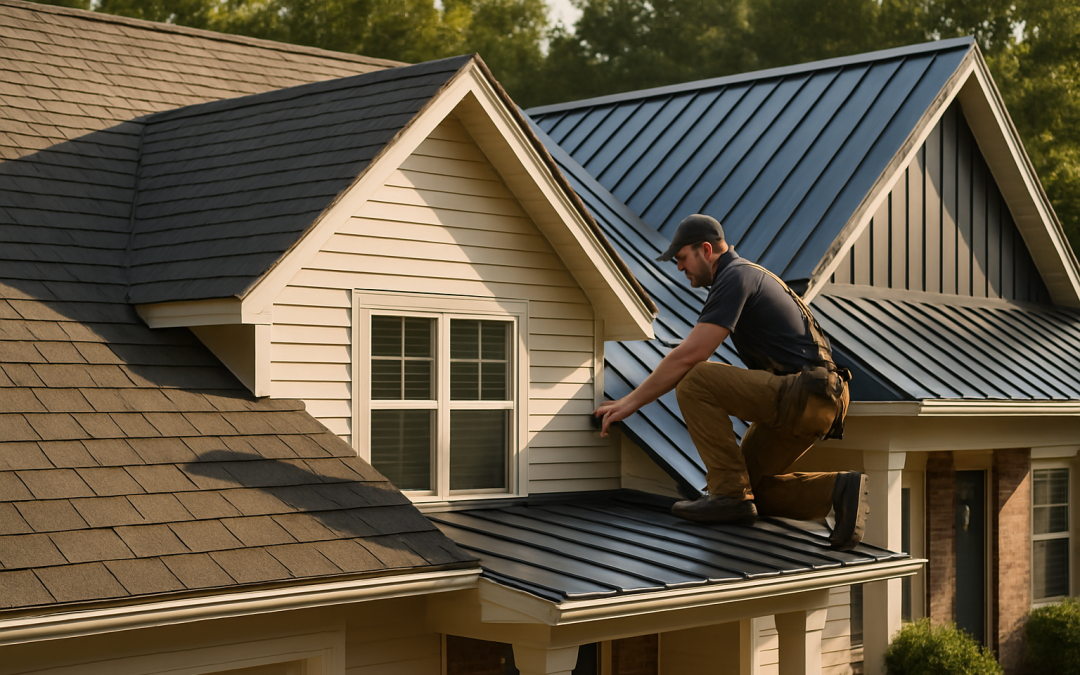
Asphalt shingles are usually the lower-cost roofing option, while metal roofing generally costs more upfront but can last significantly longer. Asphalt shingles can make sense for homeowners who want an affordable, familiar roofing system with a relatively simple installation, while metal can be a better fit for homeowners prioritizing longevity, durability, energy performance, and reduced replacement frequency. The right choice depends on your budget, climate, roof design, expected ownership period, maintenance preferences, and the type of metal or asphalt roofing system you select.
Choosing a new roof is rarely as simple as comparing two material prices. Asphalt shingles and metal roofing are both widely used residential roofing systems, but they differ substantially in upfront cost, expected service life, appearance, maintenance, installation, weather performance, and long-term value.
For some homeowners, asphalt shingles remain the practical choice because they provide a lower initial investment and broad style availability. For others, paying more for metal can make sense if the goal is a roof that may remain in service for several decades with fewer full replacements.
This guide explains the major differences so you can compare the two roofing systems based on the factors that actually affect a homeowner’s decision.
Table of Contents
- Asphalt Shingles vs. Metal Roofing: Quick Answer
- How Much Does Asphalt Shingle Roofing Cost?
- How Much Does Metal Roofing Cost?
- Upfrcont Cost vs. Long-Term Roofing Value
- How Long Does Asphalt Shingle Roofing Last?
- How Long Does Metal Roofing Last?
- Maintenance Differences
- Weather and Durability Comparison
- Energy Efficiency and Summer Heat
- Noise: Are Metal Roofs Really Louder?
- Appearance and Curb Appeal
- Installation Differences
- Roof Weight and Structural Considerations
- Repairing Asphalt Shingles vs. Metal Roofing
- Insurance and Resale Considerations
- Environmental Considerations
- When Asphalt Shingles May Be the Better Choice
- When Metal Roofing May Be the Better Choice
- Common Roofing Comparison Mistakes
- How to Choose Between Asphalt and Metal Roofing
- Frequently Asked Questions
- Summary and Next Steps
Asphalt Shingles vs. Metal Roofing: Quick Answer
Choose asphalt shingles when minimizing upfront cost, maintaining a traditional appearance, and keeping installation relatively straightforward are your priorities.
Choose metal roofing when you are willing to spend more upfront in exchange for a potentially much longer service life, strong weather resistance, and lower replacement frequency.
For many homeowners, asphalt architectural shingles cost roughly $5–$10 per square foot installed, while metal roofing commonly costs about $8–$16 per square foot installed, although both ranges can vary significantly by material, roof complexity, location, and installation requirements.
Neither material is automatically the better investment. A homeowner planning to sell within a few years may value asphalt’s lower initial cost differently from someone planning to remain in the home for 30 years or more.
How Much Does Asphalt Shingle Roofing Cost?
Asphalt shingles remain one of the most affordable mainstream residential roofing options.
For a typical professionally installed asphalt shingle roof, homeowners can often use approximately $5–$10 per square foot as a broad planning range, with premium products and complicated roofs potentially costing more.
For a roof measuring approximately 2,000 square feet, that represents a rough project range of:
- $10,000–$20,000 for many standard installations.
This is a planning estimate rather than a guaranteed price.
The actual cost can change based on:
- Shingle quality.
- Roof pitch.
- Roof geometry.
- Number of layers being removed.
- Roof-deck condition.
- Flashing requirements.
- Ventilation.
- Local labor rates.
- Permit requirements.
- Disposal costs.
Three-Tab vs. Architectural Shingles
Basic three-tab shingles generally cost less than architectural or dimensional shingles.
Architectural shingles are now a common choice for homeowners who want improved appearance and potentially better durability without moving into the price range of many premium roofing systems.
Some luxury asphalt shingles are designed to mimic slate, wood, or other premium materials and can cost considerably more than standard asphalt products.
How Much Does Metal Roofing Cost?
Metal roofing generally requires a larger upfront investment than asphalt shingles.
A broad planning range for professionally installed residential metal roofing is approximately $8–$16 per square foot, although the actual range can extend beyond these figures depending on the type of metal and installation system.
For a 2,000-square-foot roof, that could mean roughly:
- $16,000–$32,000 for many residential installations.
Some basic exposed-fastener metal systems can cost less, while premium standing-seam systems, copper, zinc, complex details, and specialty finishes can cost substantially more.
Types of Metal Roofing
“Metal roof” describes several different systems rather than one product.
Common residential options include:
- Steel roofing.
- Aluminum roofing.
- Standing-seam metal roofing.
- Exposed-fastener metal panels.
- Metal shingles.
- Copper roofing.
- Zinc roofing.
The material and installation method can have a major effect on both price and expected service life.
Upfront Cost vs. Long-Term Roofing Value
The biggest difference between asphalt shingles and metal roofing is often the relationship between initial cost and replacement frequency.
Asphalt shingles generally cost less to install, but they typically have a shorter service life.
Metal roofing generally costs more initially, but a properly selected and installed metal system can last several decades and, depending on the material and system, potentially much longer.
This means the cheaper roof is not necessarily the cheaper roof over the entire period you own the home.
Example of the Long-Term Difference
Imagine a homeowner spends $14,000 on an asphalt roof that provides approximately 20 years of service.
A metal roof might cost $25,000 but potentially remain serviceable for 40–70 years or more depending on the system.
The metal roof requires a larger investment at the beginning, but the homeowner may avoid a second full roof replacement during the same ownership period.
That does not guarantee metal will have a higher financial return. Financing costs, maintenance, climate, resale timing, installation quality, and actual service life all affect the calculation.
How Long Does Asphalt Shingle Roofing Last?
Asphalt roofing lifespan varies substantially by shingle quality and environmental conditions.
As a broad guideline:
- Three-tab shingles: Often around 15–20 years.
- Architectural shingles: Often around 20–30 years.
- Premium asphalt shingles: Potentially 30 years or more depending on the product and conditions.
These are typical planning ranges rather than expiration dates.
Extreme heat, repeated storms, poor ventilation, improper installation, algae growth, hail, high winds, and other conditions can shorten the practical service life of an asphalt roof.
Why Asphalt Shingles Age
Asphalt shingles gradually lose protective granules and can become brittle over time.
Common signs of aging include:
- Missing shingles.
- Cracked or curled shingles.
- Excessive granules in gutters.
- Exposed fiberglass mat.
- Damaged flashing.
- Recurring leaks.
- Visible deterioration around roof penetrations.
How Long Does Metal Roofing Last?
Metal roofing generally has a longer expected service life than standard asphalt shingles.
Many residential metal roofing systems can provide approximately 40–70 years of service, with some premium materials and properly maintained systems lasting longer.
Factors affecting metal roof lifespan include:
- Metal type.
- Coating quality.
- Installation quality.
- Climate.
- Fastener design.
- Roof slope.
- Exposure to coastal conditions.
- Maintenance.
Standing-seam systems can offer particularly long service lives because many of their fastening components are concealed and the system can accommodate movement from temperature changes when properly designed.
Maintenance Differences
Neither roofing material is maintenance-free.
Asphalt Shingle Maintenance
Asphalt roofs should be inspected periodically for:
- Missing shingles.
- Cracking.
- Curling.
- Granule loss.
- Flashing deterioration.
- Algae or moss growth where applicable.
- Damage around vents and chimneys.
Small problems can sometimes be repaired before they become larger leaks.
Metal Roof Maintenance
Metal roofs should also be inspected periodically.
Homeowners should look for:
- Loose or damaged panels.
- Failed fasteners.
- Coating damage.
- Corrosion.
- Flashing problems.
- Sealant deterioration where applicable.
- Damage from falling branches or severe weather.
Metal roofing may require fewer major repairs over its lifetime, but repairs can require specialized knowledge depending on the system.
Weather and Durability Comparison
Metal roofing generally has a strong reputation for durability, but asphalt shingles can also perform well when appropriately selected and installed.
High Winds
Both systems can be designed for high-wind environments.
Performance depends on the specific product, fastening method, installation quality, roof design, and local building requirements.
Do not assume that every metal roof automatically outperforms every asphalt shingle in wind. Product specifications matter.
Hail
Hail can damage both roofing materials.
Metal panels may dent, while asphalt shingles can crack, lose granules, or suffer other impact damage.
Some roofing products are specifically tested and rated for impact resistance, so homeowners in hail-prone areas should compare those ratings rather than relying on material category alone.
Heavy Rain
Both systems can provide effective water protection when installed correctly.
Flashing, underlayment, valleys, penetrations, drainage, and installation quality are critical regardless of the visible roofing material.
Snow and Ice
Cold climates create additional considerations such as ice dams, snow loads, underlayment, ventilation, and snow retention.
A metal roof may allow snow to slide suddenly, so snow-retention measures can be appropriate in certain applications.
Energy Efficiency and Summer Heat
Metal roofing is sometimes described as inherently more energy efficient than asphalt shingles, but the reality is more nuanced.
A roof’s effect on energy use depends on:
- Roof color.
- Solar reflectance.
- Emittance.
- Roof ventilation.
- Attic insulation.
- Roof assembly.
- Climate.
A light-colored, reflective metal roof can reduce solar heat gain compared with some darker roofing products.
However, simply switching from asphalt to metal does not guarantee lower utility bills if the attic insulation and ventilation system are inadequate.
Homeowners interested in energy savings should evaluate the entire roof assembly rather than choosing a material based solely on marketing claims.
Noise: Are Metal Roofs Really Louder?
Metal roofs can produce more noticeable rain noise than asphalt under some conditions, particularly when installed over open framing or without adequate insulation.
In a typical modern home with insulation, sheathing, underlayment, and an appropriate roof assembly, the difference may be much less noticeable than homeowners expect.
If noise is a concern, ask the contractor how the proposed metal roofing system will be installed and what layers will separate the metal panels from the home’s living space.
Appearance and Curb Appeal
Appearance is one of the most subjective differences between asphalt and metal roofing.
Asphalt Shingle Appearance
Asphalt shingles are available in many colors and styles.
Architectural and luxury shingles can imitate the appearance of:
- Wood shakes.
- Slate.
- Traditional shingles.
This makes asphalt a flexible choice for homeowners who want a conventional residential appearance.
Metal Roof Appearance
Modern metal roofing is available in many colors, profiles, and finishes.
Metal shingles can create a traditional appearance, while standing-seam roofing creates a more contemporary architectural look.
Metal is no longer limited to the agricultural or industrial appearance many homeowners associate with older metal roofs.
Installation Differences
Installation is one of the most important factors affecting roofing performance.
Asphalt shingles are familiar to a large number of roofing contractors, making qualified installation relatively easy to find in many markets.
Metal roofing requires greater attention to panel layout, thermal movement, fasteners, seams, flashing, penetrations, and manufacturer-specific installation requirements.
A contractor who is excellent at asphalt roofing is not automatically the right contractor for a complex standing-seam metal roof.
Why Contractor Experience Matters
A high-quality roofing material cannot compensate for poor installation.
When comparing metal roofing estimates, ask how much experience the contractor has with the exact system being proposed.
For asphalt roofing, ask about manufacturer training, installation practices, ventilation, flashing, and warranty requirements.
Roof Weight and Structural Considerations
One misconception is that metal roofing is always dramatically lighter than asphalt shingles.
Some metal systems are indeed lightweight, but the total roof assembly and existing roofing layers matter.
If a new roof will be installed over an existing roof rather than after a complete tear-off, the combined weight of the existing materials and new system should be considered.
Any concerns about structural capacity should be evaluated before installation rather than after materials arrive at the property.
Repairing Asphalt Shingles vs. Metal Roofing
Asphalt shingles can be relatively straightforward to repair because individual damaged shingles can often be replaced.
Metal roofing can also be repaired, but the process varies considerably by system.
Potential metal roof repairs can involve:
- Replacing damaged panels.
- Repairing seams.
- Replacing fasteners.
- Repairing flashing.
- Addressing coating damage.
Standing-seam systems may require specialized repair techniques, particularly when panel sections and concealed fastening systems are involved.
For both materials, the key is to identify and correct the source of the problem rather than repeatedly patching visible symptoms.
Insurance and Resale Considerations
Roofing material can influence insurance and resale considerations, but there is no universal rule that metal automatically produces lower insurance premiums or a higher resale return.
Insurance companies may consider factors such as:
- Roof age.
- Material.
- Wind resistance.
- Impact resistance.
- Local weather risks.
- Property location.
Some insurers may offer incentives for certain roofing characteristics, while others may not.
Homeowners should ask their insurance provider about the specific roof system before assuming that a particular material will reduce premiums.
For resale, a newer roof can be attractive to buyers because it may reduce the likelihood of an immediate major replacement. However, the actual value added depends on the local housing market and buyer preferences.
Environmental Considerations
Roofing materials have environmental impacts throughout their life cycle, including manufacturing, transportation, installation, maintenance, and disposal.
Metal roofing has an important advantage in that many metal products contain recycled material and can be recyclable at the end of their service life.
Asphalt shingles are more difficult to recycle in many markets, although shingle recycling programs do exist in some locations.
The longer service life of metal can also reduce the frequency of full roof replacements, which can affect the amount of roofing material entering the waste stream over time.
However, environmental comparisons should consider the complete life cycle rather than treating one material as universally sustainable.
When Asphalt Shingles May Be the Better Choice
Asphalt shingles may be the right choice when:
- You need to keep the initial roofing budget under control.
- You want a familiar and widely available roofing system.
- You prefer a traditional residential appearance.
- You plan to sell the home before the longer lifespan of metal provides much additional value.
- You have a contractor you trust who specializes in quality asphalt installation.
- You want relatively simple repairs and widespread material availability.
For many homeowners, architectural asphalt shingles provide a practical balance of price, appearance, and expected service life.
When Metal Roofing May Be the Better Choice
Metal roofing may make more sense when:
- You expect to remain in the home for several decades.
- You want to reduce the likelihood of another full roof replacement.
- Your budget can accommodate a larger initial investment.
- You value durability and long-term performance.
- You live in an environment where an appropriately specified metal system provides advantages.
- You like the appearance of metal roofing.
- You want a roofing material with strong recycling potential.
Metal can be especially compelling for homeowners who think about roofing as a long-term capital investment rather than a short-term home improvement.
Common Roofing Comparison Mistakes
Comparing Only the Initial Price
The cheapest installation may not be the lowest-cost roofing solution over decades of ownership.
Consider the expected lifespan and likelihood of future replacement.
Assuming Metal Never Needs Maintenance
Metal roofing still requires inspection and maintenance. Fasteners, flashing, coatings, penetrations, and seams can develop problems.
Assuming Asphalt Is Always Low Quality
Premium asphalt shingles can provide good durability, strong warranties, and attractive architectural finishes.
Choosing a Contractor Based Only on Price
Installation quality can have a greater effect on roof performance than small differences in material pricing.
Ignoring Ventilation
Inadequate attic ventilation can contribute to premature roofing deterioration and moisture problems.
Ignoring Roof Geometry
A simple roof and a highly complicated roof can have very different labor requirements even when their measured areas are similar.
Assuming Every Metal Roof Is the Same
Steel panels, aluminum systems, standing seam, metal shingles, copper, and other systems have different costs, performance characteristics, and installation requirements.
How to Choose Between Asphalt and Metal Roofing
Start by identifying your priorities.
If Your Primary Concern Is Upfront Cost
Asphalt shingles will usually be the stronger candidate.
If Your Primary Concern Is Longevity
Metal roofing deserves serious consideration, particularly if you expect to remain in the home for several decades.
If You Want Traditional Appearance
Architectural asphalt shingles may provide the familiar appearance you want at a lower cost.
If You Want Modern or Distinctive Appearance
Metal offers a wide range of architectural styles, including standing-seam and metal-shingle designs.
If You Live in a Severe-Weather Area
Compare specific product ratings for wind, impact, fire, and other relevant risks rather than relying solely on the material category.
If You Plan to Sell Soon
A lower-cost asphalt system may make more financial sense if you are unlikely to remain in the home long enough to benefit from metal’s longer service life.
If You Plan to Stay for Decades
Metal’s higher initial price may become easier to justify when the potential for avoiding another full roof replacement is important.
Frequently Asked Questions
Is metal roofing better than asphalt shingles?
Neither is universally better. Asphalt shingles generally have a lower upfront cost, while metal roofing generally offers a longer service life. The right choice depends on budget, climate, roof design, appearance, ownership period, and installation quality.
Is metal roofing more expensive than asphalt shingles?
Usually. Asphalt architectural shingles commonly cost about $5–$10 per square foot installed, while many residential metal roofing systems fall around $8–$16 per square foot installed. Specialty products can fall outside these ranges.
How long do asphalt shingles last?
Three-tab shingles often last around 15–20 years, architectural shingles commonly around 20–30 years, and premium products can potentially last longer. Actual lifespan depends on product quality, climate, ventilation, installation, and maintenance.
How long does a metal roof last?
Many residential metal roofing systems can last approximately 40–70 years, with some premium systems lasting longer. Material type, coating, installation quality, climate, and maintenance all affect service life.
Does a metal roof save money on energy bills?
It can in some circumstances, particularly when a reflective metal roofing system reduces solar heat gain. However, energy savings depend on the entire roof assembly, including insulation, ventilation, roof color, climate, and other building characteristics.
Are metal roofs noisy when it rains?
They can be, but the noise level depends heavily on the roof assembly. Insulation, sheathing, underlayment, and the building’s interior construction can significantly reduce rain noise.
Can you put a metal roof over asphalt shingles?
Some metal roofing systems can be installed over existing asphalt shingles when local codes, manufacturer requirements, roof condition, and structural considerations allow it. A contractor should evaluate the existing roof before recommending an overlay.
Which roof is better in a hailstorm?
Performance depends on the specific roofing products and their impact ratings. Metal can dent from hail, while asphalt shingles can crack or lose granules. Homeowners in hail-prone regions should compare tested product ratings rather than relying on material type alone.
Which roof is easier to repair?
Asphalt shingles are generally straightforward to repair because individual shingles can often be replaced. Metal roofs can also be repaired, but some systems require specialized knowledge and techniques.
Does a metal roof increase home value?
A metal roof can be attractive to buyers because of its durability and long expected service life, but the resale benefit varies by market. Homeowners should not assume that the entire cost of a premium metal roof will be recovered through resale.
Can metal roofing rust?
Some metal roofing materials can corrode if their protective coating or finish is compromised or if the system is exposed to particularly aggressive conditions. Proper material selection, compatible components, protective coatings, and maintenance are important.
Summary and Next Steps
Asphalt shingles and metal roofing can both be excellent residential roofing choices when the material is appropriate for the home and installed correctly.
Asphalt shingles are usually the better choice for homeowners who prioritize lower upfront cost, traditional appearance, widespread availability, and straightforward installation.
Metal roofing is often the better choice for homeowners who prioritize long-term durability, extended service life, and reducing the likelihood of another complete roof replacement.
The decision should ultimately be based on more than the price of the materials.
Before choosing a roofing system, consider:
- Initial installation cost.
- Expected service life.
- Local climate.
- Roof complexity.
- Maintenance requirements.
- Energy performance.
- Appearance.
- Contractor availability.
- Warranty requirements.
- Expected length of home ownership.
Then obtain detailed estimates from qualified roofing contractors for both systems when practical. Ask each contractor to explain the complete scope, including tear-off, underlayment, flashing, ventilation, roof-deck repairs, installation, disposal, and warranty coverage.
The best roofing choice is the one that fits the home’s structure, the local environment, the homeowner’s budget, and the amount of time the homeowner expects to own the property.