
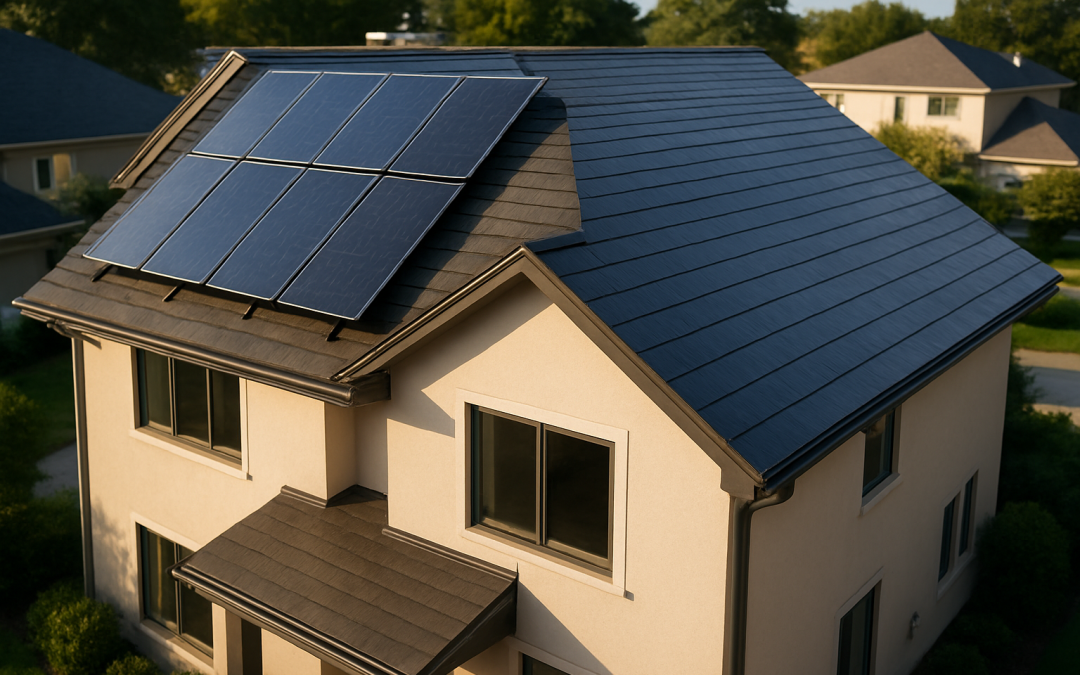
Solar roof shingles can be a good option if you need a new roof and also want to add solar power, but they are usually more expensive and slightly less efficient than traditional solar panels. For most homeowners, solar shingles make the most sense during a full roof replacement, with total project costs often ranging from $30,000 to $70,000+ depending on roof size, brand, and how much of your roof is “active” solar. They offer a cleaner look and can reduce energy bills, but payback times are often 10–20 years and depend heavily on your local utility rates, incentives, and sun exposure. If your roof is in good shape or you need the lowest-cost solar option, conventional solar panels are usually more practical.
If you’re comparing solar shingles to a standard roof replacement, it’s normal to feel overwhelmed by the cost, technology, and long-term commitment. This guide is for homeowners who are already thinking about replacing an aging roof or dealing with storm damage and want to know if solar shingles are worth it. We’ll walk through how they work, what they cost, when insurance might help, and how to decide between repairing, replacing, or going all-in on a solar roof.
Table of Contents
- What Are Solar Roof Shingles?
- How Solar Roof Shingles Work
- When to Consider Solar Roof Shingles
- What to Check First on Your Existing Roof
- Signs Your Roof Situation Is Serious
- Solar Roof Shingle Costs vs Regular Roofs and Panels
- Insurance and Solar Roof Shingles
- Solar Roof Shingle Installation Process and Timeline
- Repair vs Replace vs Solar Upgrade
- Common Mistakes Homeowners Make with Solar Shingles
- Frequently Asked Questions
- Summary and Next Steps
What Are Solar Roof Shingles?
Solar roof shingles (also called solar tiles or solar roofing) are roofing materials that look similar to regular shingles but also generate electricity from sunlight. Instead of mounting large solar panels on top of your existing roof, the shingles themselves become both your roof covering and your solar system.
They are designed to blend in more with the roof, which many homeowners prefer for appearance or HOA reasons. However, this “all-in-one” design usually comes with higher upfront cost and more complex installation compared to standard asphalt shingles plus separate solar panels.
How Solar Shingles Differ from Regular Shingles
- Regular shingles: Only protect your home from weather; they do not produce electricity.
- Solar shingles: Protect your home and generate power, but require electrical components, inverters, and professional solar wiring.
- Weight and thickness: Solar shingles are typically thicker and heavier than standard asphalt shingles.
- Brands and systems: Common options include Tesla Solar Roof, CertainTeed, GAF Energy, and others, each with different looks and performance.
Pros and Cons at a Glance
Advantages:
- Clean, low-profile appearance compared to bulky solar panels.
- Good option if you already need a full roof replacement.
- Can lower electric bills and increase energy independence.
- May increase home value in some markets.
Disadvantages:
- Higher upfront cost than a standard roof or roof + panels in many cases.
- Usually less efficient per square foot than traditional solar panels.
- Fewer contractors are experienced with these systems.
- Repairs and replacements can be more specialized and expensive.
How Solar Roof Shingles Work
Solar shingles work similarly to solar panels: they convert sunlight into electricity using photovoltaic (PV) cells. The main difference is that the PV cells are built into roofing materials instead of framed panels.
Basic Components
- Active solar shingles: Sections of the roof that generate electricity.
- Non-solar shingles: Matching shingles that do not produce power but keep the roof uniform.
- Inverter: Converts the DC power from the shingles into AC power your home can use.
- Electrical wiring and monitoring: Connects the shingles to your home’s electrical panel and tracks energy production.
Efficiency Compared to Solar Panels
- Solar shingles typically have lower efficiency than high-end solar panels, meaning you may need more roof area to produce the same power.
- Because they are integrated into the roof, airflow and cooling are more limited, which can slightly reduce performance in hot weather.
- For homes with limited roof space or heavy shade, traditional panels may be a better choice for maximum output.
What This Means for Your Electric Bill
- In sunny areas with good roof orientation, solar shingles can offset a large portion of your electric bill.
- In cloudy regions or with shaded roofs, savings will be lower and payback time longer.
- Local utility rates, net metering rules, and incentives heavily affect how quickly the system pays for itself.
When to Consider Solar Roof Shingles
Solar shingles make the most sense when you are already planning a roof replacement or dealing with significant roof damage. Installing them on a fairly new roof just to “go solar” usually isn’t cost-effective.
Good Situations for Solar Shingles
- Your roof is 15–25+ years old or clearly near the end of its life.
- You have storm damage and are looking at a full or major replacement anyway.
- Your roof has good sun exposure (south or west facing, minimal shade).
- You care strongly about appearance and don’t like the look of traditional panels.
- Your HOA or local rules make standard solar panels difficult to approve.
Situations Where Solar Shingles May Not Be Worth It
- Your roof is less than 10 years old and in good condition.
- You have heavy shade from trees or nearby buildings.
- You need the lowest-cost solution to fix roof damage quickly.
- You plan to move in the next few years and may not see the long-term savings.
What to Check First on Your Existing Roof
Before deciding on solar shingles, it helps to understand the current state of your roof. You can do a safe, ground-level check without climbing on the roof.
Safe Visual Checks from the Ground
- Look for missing, curled, or cracked shingles.
- Check for sagging areas or uneven lines in the roof surface.
- Inspect gutters and downspouts for large amounts of shingle granules (sign of aging).
- Look in your attic (if safe) for water stains, damp insulation, or daylight coming through the roof deck.
When You Should Not Delay an Inspection
- Active leaks or water stains on ceilings or walls.
- Visible storm damage (missing sections, exposed wood, torn shingles).
- Repeated shingle blow-offs after moderate wind.
- Moldy smells or dampness in the attic.
If you see any of these, contact a roofing contractor promptly. Waiting can turn a manageable repair or replacement into structural damage and higher costs.
Signs Your Roof Situation Is Serious
Whether you choose solar shingles or a standard roof, some warning signs mean you should act quickly.
Urgent Red Flags
- Active leaks during or after rain.
- Bulging or sagging ceilings inside the home.
- Large areas of missing shingles or exposed underlayment/wood.
- Soft spots in ceilings or around roof penetrations (vents, chimneys).
Serious but Less Immediate Signs
- Widespread shingle curling, cracking, or loss of granules.
- Roof age over 20–25 years for asphalt shingles.
- Multiple past repairs in the same area.
- Higher energy bills due to poor roof ventilation or dark, heat-absorbing surfaces.
In these cases, it’s wise to schedule a professional inspection soon and start comparing options, including whether a solar roof could make sense during replacement.
Solar Roof Shingle Costs vs Regular Roofs and Panels
Solar roof shingles combine the cost of a new roof with the cost of a solar energy system. This makes them more expensive upfront than a standard roof alone, but they can offset some of that cost through energy savings and incentives.
Typical Cost Ranges
For reference, here are common roofing cost ranges (not including solar):
- Minor roof repair: $150–$1,000
- Moderate repair: $1,000–$3,000
- Major repair: $3,000–$7,000+
- Full roof replacement (standard materials): $5,000–$15,000+ depending on size and material
By comparison, a full solar shingle roof that replaces your existing roof and adds solar can often range from $30,000 to $70,000+, depending on:
- Roof size and complexity (multiple levels, valleys, dormers).
- Brand and type of solar shingle.
- How much of the roof is “active” solar vs non-solar shingles.
- Local labor rates and permitting requirements.
Solar Shingles vs Roof + Traditional Panels
- A typical asphalt roof replacement might be $8,000–$15,000+.
- A separate solar panel system might add $12,000–$30,000+ depending on size.
- Together, roof + panels can sometimes be similar in cost or cheaper than a high-end solar shingle system, while offering better efficiency.
However, solar shingles may be more attractive if you strongly value appearance or if your roof shape makes panel mounting difficult.
What Increases Solar Shingle Costs Significantly
- Very steep or complex roofs (more labor, more waste).
- Structural upgrades needed to support the system.
- Electrical panel upgrades or long wire runs.
- Premium brands or custom designs.
To better understand how roof size, pitch, and material choice affect costs in general, you may find it helpful to review resources like how roof size and pitch change the price and how material choice affects roofing cost.
When Repair Is No Longer Worth It
Repairing an old or badly damaged roof may not be wise if:
- Repairs are approaching 30–50% of full replacement cost.
- The roof is already near the end of its expected life.
- Leaks keep returning in different areas.
In these cases, it can be smarter to invest in a full replacement and decide at that point whether to choose a standard roof or a solar shingle system.
Insurance and Solar Roof Shingles
Homeowners insurance can play a major role if you are considering solar shingles because of storm damage or other sudden events.
When Insurance May Cover Roof Damage
Most policies cover roof damage caused by:
- Windstorms and hail
- Falling trees or debris
- Fire
- Other sudden, accidental events listed in your policy
Insurance generally does not cover normal wear and tear, age-related deterioration, or poor installation.
Will Insurance Pay for Solar Shingles?
- If your existing roof is damaged by a covered event, insurance usually pays for a like-kind replacement (e.g., asphalt shingles for asphalt shingles).
- If you choose to upgrade to solar shingles, insurance may pay what it would have cost to replace with standard materials, and you pay the difference for the upgrade.
- Once solar shingles are installed, you may need to update your policy to ensure the solar system itself is properly covered.
How to File a Claim (Basic Steps)
- Document visible damage with photos from the ground and inside the home.
- Contact your insurance company as soon as possible after the event.
- Schedule an adjuster visit and consider having a roofing contractor present.
- Get detailed written estimates for both standard roof replacement and, if interested, a solar shingle upgrade.
Common Claim Mistakes to Avoid
- Waiting too long to report damage.
- Making permanent repairs before the adjuster inspects.
- Not reading your policy’s roof coverage details (actual cash value vs replacement cost).
- Accepting the first settlement without comparing it to contractor estimates.
Solar Roof Shingle Installation Process and Timeline
Solar shingle installations are more complex than a standard roof replacement because they involve both roofing and electrical work.
Typical Installation Steps
- Roof inspection and measurements.
- Design of the solar layout and electrical system.
- Permits and approvals from your city and utility.
- Removal of the old roof (if replacing).
- Installation of underlayment, solar shingles, and non-solar shingles.
- Electrical wiring, inverter installation, and connection to your panel.
- Final inspections and utility approval to turn the system on.
How Long It Takes
- Planning, design, and permits: 2–8 weeks, depending on local processes.
- Physical installation: Often 3–7 days for an average home, longer for complex roofs.
- Final inspections and utility approval: 1–4 weeks after installation.
From first consultation to a fully operating solar shingle roof, expect 1–3 months in many areas, sometimes longer in busy seasons or strict permitting regions.
Repair vs Replace vs Solar Upgrade
Deciding whether to repair your current roof, replace it with standard materials, or upgrade to solar shingles comes down to roof condition, budget, and long-term plans.
When a Simple Repair Makes Sense
- Damage is limited to a small area (a few shingles or a single leak).
- The rest of the roof is in good condition and relatively young.
- Repair costs are clearly in the minor to moderate range ($150–$3,000).
When a Full Replacement Is Smarter
- Roof is near or past its expected lifespan.
- Multiple leaks or widespread shingle failure.
- Major storm damage with large sections affected.
- Repair estimates are approaching $3,000–$7,000+ and the roof is older.
When to Consider a Solar Shingle Upgrade
- You already need a full roof replacement.
- You plan to stay in the home long enough to benefit from energy savings (often 10+ years).
- Your roof has good sun exposure and minimal shading.
- You can handle a higher upfront cost for lower long-term utility bills.
Should You Get Multiple Quotes?
Yes. For a major decision like this, you should:
- Get at least 2–3 quotes for a standard roof replacement.
- Get at least 2 quotes for solar shingles or roof + solar panels.
- Compare warranties, materials, and experience with solar systems.
To avoid paying more than necessary, it can help to understand why some roofers charge more than others and how to avoid overpaying for a roof.
Common Mistakes Homeowners Make with Solar Shingles
1. Focusing Only on Appearance
Choosing solar shingles purely for looks without checking roof condition, sun exposure, and total cost can lead to disappointment. Always compare energy production and payback time to traditional panels.
2. Ignoring Roof Age and Structure
Installing solar shingles on a weak or aging roof deck can cause problems later. The roof structure must be sound before adding any solar system.
3. Not Checking Contractor Experience
Solar shingles require both roofing and electrical expertise. Hiring a contractor without proven experience in your chosen system can lead to leaks, electrical issues, or warranty problems.
4. Underestimating Total Project Time
Permits, inspections, and utility approvals can take weeks. If your roof is already leaking badly, you may need a faster, more straightforward replacement first.
5. Skipping a Detailed Cost Comparison
Some homeowners never compare the cost of solar shingles to a standard roof plus traditional solar panels. In many cases, panels offer better performance per dollar, even if they are more visible.
Frequently Asked Questions
Are solar roof shingles worth it?
Solar shingles can be worth it if you already need a new roof, have good sun exposure, and plan to stay in your home long enough to benefit from lower electric bills. They are usually more expensive upfront than a standard roof or roof plus panels, so the decision depends on your budget and priorities. For many homeowners, traditional solar panels remain the more cost-effective option.
How long do solar roof shingles last?
Most solar shingles are designed to last around 20–30 years, similar to or slightly longer than typical asphalt shingles. The roof’s waterproofing and the solar power production may have different warranty periods, so read the fine print. Over time, energy output will gradually decline, just like with regular solar panels.
Can I put solar shingles on part of my roof?
Yes, many systems allow you to install active solar shingles on the sunniest sections and use matching non-solar shingles elsewhere. This can help control costs while still generating meaningful power. Your installer will design a layout based on your roof shape and sun exposure.
Do solar shingles work during a power outage?
Most grid-tied solar shingle systems shut off automatically during a power outage for safety reasons. To have backup power, you need a battery system or special equipment designed for backup operation. Ask your installer about battery options if backup power is important to you.
Will solar shingles increase my home value?
In many markets, a modern roof and lower energy bills can make your home more attractive to buyers. However, the exact impact on value depends on your local real estate market, buyer preferences, and how well the system is documented and maintained. A new roof alone can help with resale, and adding solar may be an extra selling point for energy-conscious buyers.
Can I get tax credits or incentives for solar shingles?
In many areas, solar shingles qualify for the same federal and sometimes state or local incentives as traditional solar panels. These incentives can significantly reduce the net cost of the solar portion of the project. Always confirm current programs with a qualified tax professional or local energy office.
Summary and Next Steps
Solar roof shingles are a sleek way to combine a new roof with solar power, but they come with higher upfront costs and slightly lower efficiency than standard panels. They make the most sense when your roof already needs replacement, your home has good sun exposure, and you plan to stay long enough to benefit from energy savings.
If your roof is leaking, badly aged, or storm-damaged, your first step should be a professional roof inspection to determine whether repair or full replacement is needed. From there, you can compare a standard roof, a roof plus traditional solar panels, and a solar shingle system to see which fits your budget and long-term plans.
Schedule a qualified roofing contractor to inspect your roof and provide detailed estimates for your options, including any solar upgrades you’re considering. Compare multiple quotes, ask about warranties and experience with solar systems, and act quickly if you have active leaks or structural concerns so you can protect your home while making a smart long-term investment.