
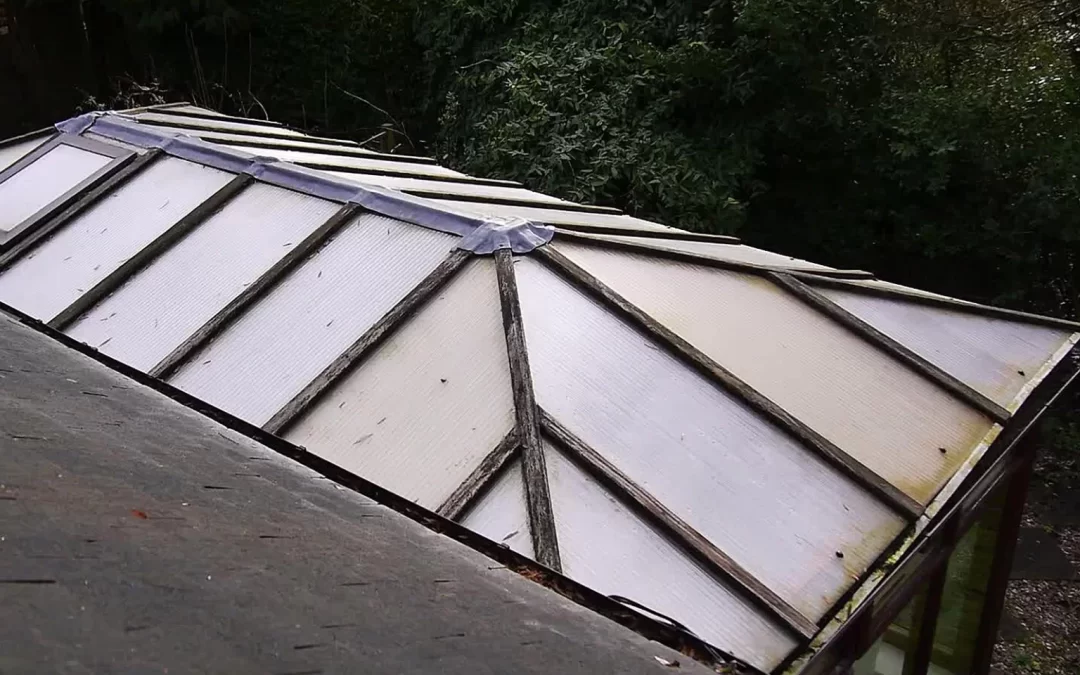
Conservatory roof replacement is not a cosmetic upgrade—it is a shift from a light-first structure to a thermally controlled living environment.
The core misconception is assuming glazing determines comfort, when in reality the roof system controls the entire thermal behavior of the space.
If the roof does not regulate heat flow effectively, no glazing configuration can fully stabilize year-round comfort.
Table of Contents
- The Conservatory Roof Performance Model
- Conservatory Roof Replacement Costs Explained
- Roof Material Options Compared
- Insulation and Thermal Control
- What Roof Replacement Actually Changes
- When a Roof Has Reached Failure Threshold
- How to Evaluate Contractor Quotes
- Common Decision Errors
- FAQ
- Key Takeaways
The Conservatory Roof Performance Model
Conservatory roof performance is determined by three hierarchical variables, not three equal categories:
- Thermal containment (primary driver): governs heat retention, overheating, and seasonal stability
- Structural integration (constraint layer): determines whether higher-performance systems can be installed safely
- Environmental control (symptom layer): condensation, acoustics, and airflow behavior resulting from thermal performance
Most conservatories fail as year-round rooms because they were designed for solar transmission, not thermal containment.
This creates a structural mismatch: light maximization is easy to build, but thermal stability requires engineered resistance to heat transfer.
Once thermal containment is weak, condensation, overheating, and cold loss are not separate issues—they are the same failure expressed in different conditions.
Conservatory Roof Replacement Costs Explained
Conservatory roof replacement costs typically fall into three practical bands based on system complexity and structural requirements:
- Lower-range systems: lightweight or polycarbonate upgrades, typically used where minimal structural change is required
- Mid-range systems: upgraded glass or partial hybrid systems with improved insulation performance
- Higher-range systems: solid tiled conversions requiring insulation layers and potential structural reinforcement
The real cost driver is not roof covering material—it is whether the structure is being upgraded into a thermally controlled system.
Two conservatories of identical size can diverge significantly in cost depending on whether structural reinforcement is required, which is often the deciding factor in full solid-roof conversions.
As a general planning range, lightweight upgrades sit at the lower end of renovation cost expectations, while full insulated conversions represent the highest tier due to structural load and insulation integration requirements.
Roof Material Options Compared
Material choice defines the tradeoff between light transmission and thermal stability:
- Glass roofs: high natural light, but prone to heat loss and overheating without high-performance glazing systems
- Polycarbonate roofs: lower cost, lightweight, but limited insulation and higher temperature variability
- Solid tiled roofs: highest thermal stability and most consistent year-round usability
- Hybrid systems: engineered balance of light entry and insulated performance zones
Material selection should follow usage intensity, not visual preference.
If the space is used daily, thermal stability outweighs daylight optimization in long-term value.
Insulation and Thermal Control
Insulation is the functional control layer that determines whether a conservatory behaves as a livable room or a seasonal buffer space.
- Insulated roof systems significantly reduce winter heat loss compared to lightweight roofing
- Thermal layering reduces extreme summer overheating in glass-heavy systems
- Stable insulation improves usability across all seasons rather than peak conditions only
Without insulation, a conservatory is structurally biased toward temperature instability regardless of glazing quality.
In practical terms, insulation determines whether energy is retained within the space or continuously lost and replaced by heating or cooling systems.
What Roof Replacement Actually Changes
Replacing a conservatory roof fundamentally changes how the space behaves as part of the home system:
- Shifts from seasonal room to year-round usable space
- Reduces temperature volatility across daily and seasonal cycles
- Decreases dependency on auxiliary heating and cooling systems
- Improves acoustic control during rainfall and wind exposure
- Stabilizes internal humidity behavior
The key transformation is not comfort improvement—it is removal of environmental instability as a defining characteristic of the space.
When a Roof Has Reached Failure Threshold
Roof replacement becomes necessary when performance degradation is systemic rather than isolated:
- Consistent overheating in warm months despite ventilation
- Cold intrusion during winter regardless of heating input
- Recurring condensation patterns across multiple seasons
- Noise transfer during rainfall indicating poor structural damping
- Visible aging or material fatigue across roofing sections
When multiple comfort failures occur simultaneously, the system is no longer underperforming—it is structurally misaligned with its intended use.
How to Evaluate Contractor Quotes
Quote evaluation must focus on system scope alignment rather than headline pricing:
- Confirm whether structural reinforcement is included in the system design
- Verify insulation type, thickness, and performance rating assumptions
- Ensure material systems are being compared on equivalent specifications
- Review warranty coverage across both materials and installation work
- Assess expected performance outcomes, not just product lists
Lower quotes frequently reflect reduced system scope rather than improved cost efficiency.
In conservatory roofing, specification differences are more important than price differences.
Common Decision Errors
- Prioritizing glass systems for aesthetics in year-round living spaces
- Underestimating structural reinforcement requirements for solid roofs
- Comparing quotes without aligning thermal performance specifications
- Delaying upgrades despite persistent seasonal discomfort patterns
- Evaluating roofing systems based on appearance rather than thermal behavior
Most dissatisfaction results from selecting visually aligned systems that fail thermally under real seasonal conditions.
FAQ
How much does a conservatory roof replacement cost?
Costs typically vary across lower, mid, and higher system bands depending on insulation level, structural reinforcement, and material choice, with full insulated conversions sitting at the highest tier.
What is the best conservatory roof option?
There is no universal best option—solid roofs maximize thermal stability, while glass systems maximize light. The correct choice depends on year-round usage requirements.
Will a new roof make a conservatory usable year-round?
Yes, if the system includes proper insulation and is designed for thermal containment rather than light transmission.
Do solid roof conversions require structural changes?
In many cases yes, because solid insulated systems introduce significantly higher load requirements than lightweight roofing.
Key Takeaways
Conservatory roof replacement is fundamentally a transition from light-driven architecture to thermally controlled living space design. Performance is determined primarily by insulation and thermal containment, not glazing or aesthetics.
The most important decision factor is not cost or appearance—it is whether the roof system can eliminate thermal instability as a structural limitation of the space.