
Gable Roof vs Hip Roof: Key Differences, Cost, Durability, and Which Roof Style Is Best for Your Home
If you’re choosing between a gable roof and a hip roof, the main trade-off is cost versus stability. Gable roofs are usually cheaper and simpler to build, while hip roofs generally handle wind and weather better but cost more in materials and labor. For most budget-conscious homeowners in average wind areas, a gable roof is perfectly fine; in high-wind or hurricane-prone regions, a hip roof is often the safer long-term choice. Exact costs and performance will depend on your home’s size, roof pitch, local codes, and the quality of installation.
This guide is for homeowners comparing roof styles for a new build, addition, or full roof replacement, especially if you’re also dealing with aging shingles, storm damage, or insurance questions. You’ll learn how gable and hip roofs differ, what they cost, how they hold up in real weather, and how to decide whether to repair, replace, or call a roofing contractor.
Table of Contents
- Gable Roof vs Hip Roof: What’s the Difference?
- Pros and Cons of Gable Roofs vs Hip Roofs
- Cost Comparison: Gable Roof vs Hip Roof
- Durability, Wind, and Weather Performance
- What to Check on Your Existing Roof (From the Ground)
- Gable vs Hip Roof: Repair or Replace?
- When Insurance May Help With Roof Damage
- How Fast You Need to Act
- Common Mistakes Homeowners Make With Gable and Hip Roofs
- Which Roof Style Is Best for Your Home?
- Frequently Asked Questions
- Summary and Next Steps
Gable Roof vs Hip Roof: What’s the Difference?
What is a gable roof?
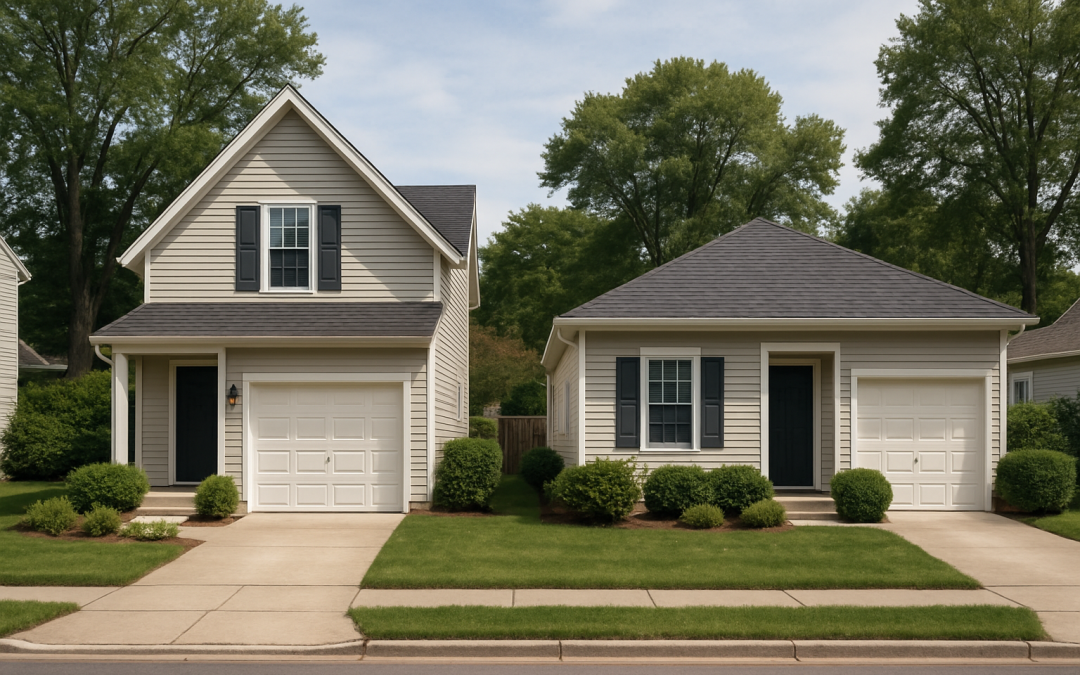
A gable roof is the classic “triangle” roof most people picture. It has two sloping sides that meet at a ridge, with flat vertical walls (gable ends) on the sides.
Key points:
- Two main sloping planes
- Triangular wall sections at each end
- Simple structure, easy to frame and ventilate
- Common on many traditional homes and sheds
What is a hip roof?
A hip roof slopes down on all four sides, with no flat vertical gable ends. All sides meet at a ridge or a central point, creating a more “pyramid-like” or “tent-like” shape.
Key points:
- Four or more sloping sides
- No vertical gable walls
- More complex framing and more roof surface
- Common on ranch homes, newer subdivisions, and high-wind areas
How this affects your home
- Appearance: Gable roofs look more traditional and can create dramatic front-facing peaks. Hip roofs look more compact and “finished” from all sides.
- Attic space: Gable roofs often provide more usable attic or storage space at the center. Hip roofs may have less open attic volume.
- Weather performance: Hip roofs usually handle wind better; gable roofs can be more vulnerable at the vertical ends if not built or braced properly.
Pros and Cons of Gable Roofs vs Hip Roofs
Pros of gable roofs
- Lower cost to build: Simpler framing and less surface area usually mean lower labor and material costs.
- Good attic ventilation: Easy to add gable vents and ridge vents to help your roof “breathe.”
- More design flexibility: Easy to add dormers, front gables, and extensions.
- Better for heavy snow (with proper pitch): Steeper gable roofs shed snow well.
Cons of gable roofs
- More wind exposure: The flat gable ends can catch strong winds, especially in storms or hurricanes.
- Potential for uplift damage: Poorly braced gables can fail in high winds.
- End walls take more weather: Wind-driven rain can hit the gable ends harder, increasing leak risk around windows and siding.
Pros of hip roofs
- Excellent wind resistance: Sloping on all sides helps deflect wind and reduce uplift.
- Even eave overhangs: Consistent overhangs can protect walls and windows from rain and sun.
- Clean, modern look: Many newer neighborhoods favor hip roofs for curb appeal.
- Stable structure: The shape naturally braces itself better against lateral forces.
Cons of hip roofs
- Higher cost: More surface area, more materials, and more complex framing increase price.
- More valleys and hips: These joints are common leak points if not flashed correctly.
- Less attic space: The inward slopes can reduce usable storage or future living space.
Cost Comparison: Gable Roof vs Hip Roof
Typical cost ranges
Actual prices vary by region, material, and roof size, but these ranges are common for asphalt shingle roofs:
- Minor roof repair: $150–$1,000
- Moderate repair: $1,000–$3,000
- Major repair: $3,000–$7,000+
- Full roof replacement: $5,000–$15,000+ (more for large or complex roofs)
For the same house footprint and material, a hip roof often costs 10–20% more than a simple gable roof because of extra framing, more roof area, and more labor.
What affects cost the most
- Roof size and complexity: More hips, valleys, and angles mean more labor and waste.
- Pitch (steepness): Steeper roofs are slower and more dangerous to work on, increasing labor costs.
- Material choice: Asphalt shingles are cheapest; metal, tile, or premium shingles cost more.
- Location and labor rates: Urban and coastal areas often have higher labor and permit costs.
- Underlying damage: Rotten decking, structural issues, or poor ventilation can add thousands.
If you want a deeper breakdown of replacement pricing and what drives it, see the guide on how much a roof replacement costs in 2026.
When costs jump significantly
- Switching from a gable to a hip roof during a remodel (requires structural changes).
- Adding dormers, extra ridges, or complex rooflines.
- Upgrading to impact-resistant shingles or metal in storm-prone areas.
- Needing structural reinforcement to meet updated building codes.
When repair is no longer worth it
Repairing a gable or hip roof may not be cost-effective when:
- The roof is 15–25+ years old and has widespread wear.
- Multiple leaks appear in different areas, not just one small spot.
- Repairs are approaching 30–40% of a full replacement cost.
- Shingles are curling, cracking, or losing granules across large sections.
For help deciding between patching and full replacement, review the guide on roof repair vs roof replacement.
Durability, Wind, and Weather Performance
How gable roofs handle weather
- Wind: More vulnerable at the gable ends; strong gusts can push against the flat walls and lift the roof edge if not properly anchored.
- Rain: Simple slopes shed water well, but end walls and roof-to-wall connections must be well flashed.
- Snow: With a decent pitch, gable roofs shed snow effectively; low-slope gables can accumulate heavy loads.
How hip roofs handle weather
- Wind: Generally superior; the sloped sides allow wind to flow over the roof instead of hitting a flat wall.
- Rain: Good shedding, but more hips and valleys mean more potential leak points if flashing is poor.
- Snow: Similar to gables; performance depends on pitch and local snow loads.
Durability factors that matter more than shape
Whether you choose gable or hip, long-term durability depends heavily on:
- Quality of installation: Proper nailing, flashing, and ventilation are critical.
- Material quality: Cheap shingles or underlayment fail sooner, regardless of roof style.
- Ventilation: Poor ventilation can overheat the attic and shorten shingle life.
- Local building codes: In high-wind zones, extra bracing and fasteners are often required.
What to Check on Your Existing Roof (From the Ground)
Do not climb on your roof. You can spot many warning signs safely from the ground or from inside your home.
Exterior checks (from the ground or a safe distance)
- Missing or lifted shingles: Look along ridges, hips, and edges for gaps or shingles that look raised.
- Sagging areas: Any dips in the roofline on a gable or hip roof can indicate structural or decking issues.
- Damaged gable ends (for gable roofs): Cracked siding, loose trim, or gaps where the roof meets the wall.
- Damaged hips and valleys (for hip roofs): Dark streaks, rusted flashing, or debris buildup in valleys.
- Granules in gutters: Excessive shingle granules in downspouts suggest aging shingles.
Interior checks (attic and ceilings)
- Ceiling stains: Brown or yellow spots on ceilings or upper walls, especially near exterior walls.
- Attic moisture: Damp insulation, moldy smells, or visible water stains on the underside of the roof deck.
- Light through the roof: Any visible daylight where it shouldn’t be is a red flag.
Signs the problem is serious
- Active dripping or multiple ceiling stains.
- Large sections of missing shingles or exposed underlayment.
- Noticeable sagging in the roofline.
- Soft or spongy spots in ceilings or upper floors.
If you see any of these, contact a roofing contractor promptly. Waiting can turn a manageable repair into structural damage and mold issues.
Gable vs Hip Roof: Repair or Replace?
When a repair is usually enough
Repairs can be a good option for both gable and hip roofs when:
- The roof is relatively new (under 10–12 years).
- Damage is limited to a small area (for example, a few shingles blown off one slope).
- There is one clear leak source, such as a valley, chimney, or vent flashing.
- The rest of the shingles still look flat, flexible, and evenly colored.
When replacement is the better choice
Full replacement is often smarter when:
- The roof is near the end of its life (15–25+ years for asphalt shingles).
- There are repeated leaks in different areas, even after repairs.
- Shingles are curling, cracking, or bald across large sections.
- Storm damage is widespread, not just on one slope.
Does roof style change the repair vs replace decision?
- Gable roofs: Often easier and cheaper to patch, especially along simple slopes.
- Hip roofs: Repairs around hips and valleys can be more labor-intensive, and repeated leaks in these areas may push you toward replacement sooner.
However, the main factors are age, overall condition, and extent of damage, not just whether the roof is gable or hip.
Getting a professional opinion
Because roof structure and hidden damage are hard to judge from the ground, a professional inspection is important before you spend thousands on repairs or replacement. A reputable roofer should:
- Inspect all slopes, hips, valleys, and gable ends.
- Check flashing, vents, and penetrations.
- Look for soft decking and attic moisture.
- Explain whether repair or replacement is more cost-effective for your situation.
When Insurance May Help With Roof Damage
When homeowners insurance typically applies
Most standard homeowners policies cover sudden, accidental damage, not normal wear and tear. Insurance may help pay for repairs or replacement of a gable or hip roof if damage is caused by:
- Windstorms or hurricanes
- Hail
- Falling trees or branches
- Fire or certain other covered events
When insurance usually does not apply
- Old age and normal deterioration of shingles.
- Long-term leaks from poor maintenance or installation.
- Neglect, such as ignoring small leaks until major damage occurs.
How to approach a potential claim
- Document damage: Take clear photos from the ground and inside the home (ceiling stains, wet areas).
- Check your policy: Look for wind, hail, and roof coverage details, including deductibles.
- Get a professional inspection: A roofing contractor can identify storm-related damage and provide an estimate.
- Contact your insurer: If damage appears storm-related and significant, file a claim promptly.
Common mistakes that get claims denied
- Waiting months after a storm to report damage.
- Not maintaining the roof (obvious pre-existing wear can be used to deny coverage).
- Starting major repairs before the adjuster inspects the roof.
- Relying only on a quick drive-by inspection instead of a detailed roofing report.
How Fast You Need to Act
Situations that require urgent action
Call a roofing contractor as soon as possible if you notice:
- Active leaks or dripping water inside.
- Large areas of missing shingles after a storm.
- Visible sagging or structural movement in the roof.
- Water stains that are growing quickly.
In these cases, you may need temporary emergency tarping followed by permanent repairs or replacement.
Situations where you have some time
- Minor shingle damage in one small area with no interior leaks.
- Granule loss and aging shingles but no active leaks.
- Cosmetic issues like slight discoloration or minor curling.
Even then, it’s wise to schedule an inspection within a few weeks so you can plan and budget before problems worsen.
Common Mistakes Homeowners Make With Gable and Hip Roofs
- Choosing style on looks alone: Ignoring local wind, snow, and code requirements when picking gable vs hip.
- Delaying inspections after storms: Small wind or hail damage can turn into leaks months later.
- Trying DIY roof work: Walking on roofs is dangerous and can void warranties or cause more damage.
- Focusing only on shingle price: Underlayment, flashing, and ventilation are just as important for longevity.
- Not getting multiple quotes: Prices and quality can vary widely between contractors.
Which Roof Style Is Best for Your Home?
When a gable roof is usually the better choice
A gable roof often makes sense if:
- You live in an area with moderate winds and typical weather.
- You want to keep costs down on a new build or replacement.
- You prefer a traditional look with potential for more attic space.
- Your existing home is already framed for a gable roof and you’re simply re-roofing.
When a hip roof is usually the better choice
A hip roof is often worth the extra cost if:
- You live in a high-wind, coastal, or hurricane-prone area.
- You want maximum stability and wind resistance.
- You prefer a low-profile, uniform look from all sides.
- You’re building new and can design the structure around a hip roof from the start.
Other factors to consider
- Future plans: If you might finish the attic or add solar later, roof shape and orientation matter.
- Local neighborhood style: Matching nearby homes can help with resale value.
- Energy and upgrades: If you’re considering solar, compare options like a traditional roof with panels versus integrated products such as a Tesla Solar Roof; see the comparison of Tesla Solar Roof vs solar panels for more detail.
How to make a final decision
For a new build or major remodel, discuss both options with your designer and roofer, considering local codes and wind ratings. For an existing home, your current framing usually dictates whether you stay with a gable or hip roof, and your main decision is when to replace and what materials to use, not changing the roof shape entirely.
Frequently Asked Questions
Is a hip roof more expensive than a gable roof?
Yes. For the same house footprint and material, a hip roof is typically 10–20% more expensive than a simple gable roof. The extra cost comes from more roof surface, more framing, and more labor around hips and valleys.
Which is better in high winds, a gable roof or a hip roof?
A hip roof generally performs better in high winds because all sides slope, allowing wind to flow over the roof instead of hitting flat gable ends. In hurricane-prone or coastal areas, building codes and insurance companies often favor hip roofs for this reason.
Does a gable or hip roof last longer?
Neither shape automatically lasts longer; lifespan depends more on materials, installation quality, and ventilation. However, in very windy areas, a well-built hip roof may have fewer wind-related issues over time than a comparable gable roof.
Can I change my gable roof to a hip roof?
It’s possible but usually complex and expensive because it involves structural changes to the framing. For most homeowners, it’s more cost-effective to keep the existing roof shape and focus on better materials, bracing, and installation.
Does roof style affect my insurance rates?
In some regions, yes. Insurers in high-wind or hurricane zones may offer better rates or terms for hip roofs because they tend to perform better in storms. Check with your insurance company to see how roof style and materials affect your specific policy.
How do I know if I should repair or replace my gable or hip roof?
Look at age, extent of damage, and leak history. A newer roof with one small damaged area is usually a repair; an older roof with widespread wear or repeated leaks is often better replaced, especially if repair costs are approaching a significant portion of a full replacement.
Summary and Next Steps
A gable roof is usually more affordable and simpler, while a hip roof offers better wind resistance and a more compact look. For most homes in average weather areas, a well-installed gable roof is perfectly adequate; in high-wind or hurricane zones, a hip roof can provide extra peace of mind. Regardless of style, your roof’s performance comes down to quality materials, proper installation, and timely maintenance.
If your current roof is aging or storm-damaged, your next step should be a professional inspection to determine whether repair or replacement makes more sense. Reviewing resources like what type of roof is best for your home and the latest roof replacement FAQs on cost and timeline can also help you plan.
Schedule a roof inspection with a qualified local contractor, especially if you see leaks, missing shingles, or storm damage. Compare a few detailed quotes, ask about both repair and replacement options, and choose the solution that best balances safety, cost, and long-term value for your home.