
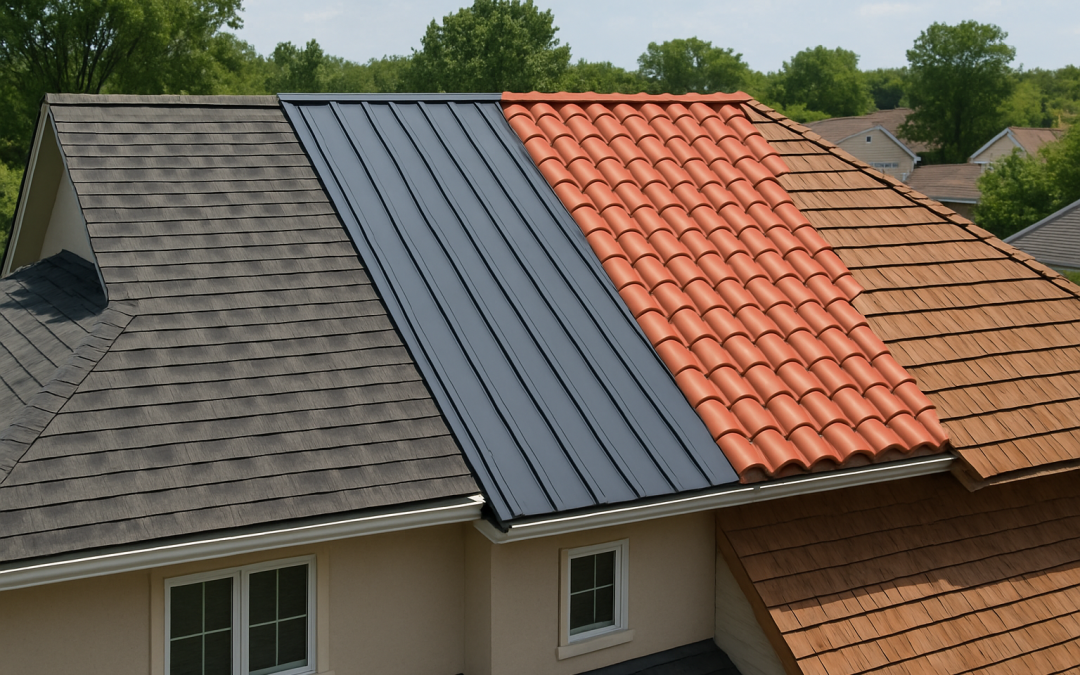
Roofing material types include asphalt shingles, metal roofing, clay or concrete tile, wood shakes, and slate. Asphalt shingles are the most common and affordable option, while metal, tile, and slate offer longer lifespans at a higher upfront cost. The best roofing material depends on your budget, climate, home style, and how long you plan to stay in the property.
In most cases, homeowners choose asphalt for cost, metal for durability and efficiency, and tile or slate for long-term performance and appearance. Each material has trade-offs in price, lifespan, maintenance, and installation complexity, so comparing them side by side is the fastest way to make the right decision.
Table of Contents
- Roofing Material Comparison (Quick Decision Guide)
- How to Choose the Right Roofing Material
- Frequently Asked Questions
- Summary and Next Steps
Roofing Material Comparison (Quick Decision Guide)
Asphalt Shingles vs. Metal Roofing
- Asphalt shingles cost less upfront and are widely available.
- Metal roofing costs more initially but typically lasts longer and requires less maintenance.
- Metal often performs better in extreme weather and may improve energy efficiency.
Metal Roofing vs. Tile Roofing
- Metal is lighter and easier to install on most homes.
- Tile (clay or concrete) is heavier and may require structural reinforcement.
- Tile performs well in hot climates but usually costs more to install.
Tile vs. Asphalt Shingles
- Tile generally lasts longer but comes with a higher upfront cost.
- Asphalt is easier and cheaper to install and repair.
- Tile offers a distinctive look suited to certain architectural styles.
Wood Shakes vs. Other Materials
- Wood provides a natural appearance but requires more maintenance.
- It is less fire-resistant unless specially treated.
- Usage has declined in some areas due to durability and insurance concerns.
Slate vs. Other Roofing Materials
- Slate is one of the longest-lasting roofing materials available.
- It is also among the most expensive and requires specialized installation.
- Best suited for long-term ownership and high-end homes.
How to Choose the Right Roofing Material
1. Budget (Upfront vs. Long-Term Cost)
- Lower budget: Asphalt shingles are typically the most affordable option.
- Mid-range: Metal roofing balances cost and durability.
- Higher budget: Tile or slate may cost more upfront but can last significantly longer.
2. Lifespan and Durability
- Asphalt shingles typically last decades but may need replacement sooner than other materials.
- Metal, tile, and slate are designed for longer lifespans.
- Long-term homeowners may benefit from higher upfront investment.
3. Climate and Weather Conditions
- Hot climates: Tile and metal can help reflect heat.
- Cold or snowy areas: Metal sheds snow more easily.
- Storm-prone regions: Impact-resistant materials may offer better protection.
4. Maintenance Requirements
- Asphalt requires periodic inspection and repairs.
- Metal typically requires less maintenance.
- Wood requires more upkeep to prevent damage.
- Tile and slate are durable but may require specialized repairs.
5. Home Structure and Style
- Heavier materials like tile and slate may need additional structural support.
- Some materials better match specific architectural styles.
- Local building codes and installation complexity can influence your options.
Frequently Asked Questions
What is the most common roofing material?
Asphalt shingles are the most common roofing material due to their affordability, ease of installation, and wide availability. They are used on the majority of residential homes in the United States.
What roofing material lasts the longest?
Slate and tile are among the longest-lasting roofing materials, often lasting many decades when properly installed and maintained. Metal roofing also offers a long lifespan compared to asphalt shingles.
What is the cheapest roofing material?
Asphalt shingles are typically the most affordable roofing material upfront. However, lower initial cost may come with a shorter lifespan compared to other materials.
Is metal roofing better than shingles?
Metal roofing generally lasts longer and requires less maintenance than asphalt shingles, but it costs more upfront. The better choice depends on your budget and how long you plan to stay in your home.
How do I choose the best roofing material for my home?
Choose based on budget, climate, lifespan expectations, maintenance level, and home structure. Comparing materials side by side and considering long-term costs can help you make a more informed decision.
Does climate affect roofing material choice?
Yes. Climate plays a major role. Metal and tile perform well in hot climates, while metal is also effective in snowy areas. Storm-prone regions may require more impact-resistant materials.
Are more expensive roofing materials worth it?
More expensive materials can be worth it if you plan to stay in your home long-term, as they often last longer and require fewer replacements. The value depends on your timeline, budget, and priorities.
Summary and Next Steps
Roofing material types vary widely in cost, lifespan, and performance. Asphalt shingles are the most affordable and widely used, while metal, tile, and slate offer longer durability and different aesthetic and structural benefits. The right choice depends on your budget, your local climate, and how long you plan to stay in your home.
If you are unsure which material makes the most sense for your situation, the next step is to get quotes from local roofing contractors and compare not just price, but lifespan, warranties, and installation requirements. A short consultation can help you avoid costly mistakes and choose a roofing system that fits both your home and your long-term plans.
If your roof is aging, showing signs of damage, or you are planning a replacement, consider scheduling an inspection sooner rather than later. Getting professional input early can help you plan your budget, avoid emergency repairs, and make a more confident decision.