
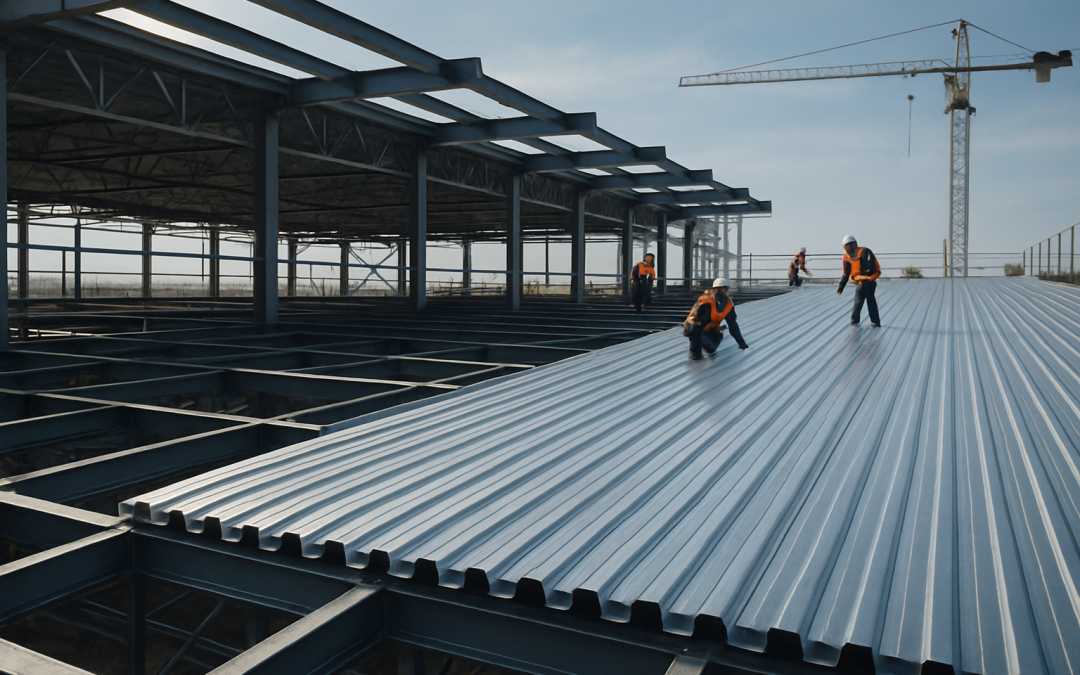
Metal roof decking is the structural metal sheet that sits on top of your home’s framing and underneath the visible roofing material. It supports the roof, helps handle wind and snow loads, and ties the whole roof structure together. For most homeowners, you’ll never see it until there’s a leak, major storm damage, or a roof replacement, and costs can range from a few hundred dollars for minor repairs to $5,000–$15,000+ when replacement is part of a full new roof. The exact solution depends on how widespread the damage is and whether your insurance will help pay for storm-related issues.
If you’re dealing with leaks, sagging, or rust and suspect a problem with metal roof decking, you’ll likely need a professional inspection rather than a DIY fix. Some problems can be repaired locally, but severe corrosion, fire damage, or structural issues usually mean replacing sections of decking or the entire roof system.
Metal roof decking is a hidden but critical part of your roof’s structure. When it fails, you can see leaks, interior damage, and even safety concerns if it’s badly rusted or weakened. This guide explains what metal roof decking is, the main types, structural benefits, basic installation concepts, and when homeowners should repair, replace, or call a roofing contractor.
Table of Contents
- What Is Metal Roof Decking on a Home?
- Types of Metal Roof Decking
- Structural Benefits of Metal Roof Decking
- Metal Roof Decking Installation Basics (Homeowner-Level Overview)
- Common Issues and Damage to Metal Roof Decking
- What Homeowners Should Check First (Safely)
- Signs the Problem with Metal Decking Is Serious
- Metal Roof Decking and Homeowners Insurance
- Cost Expectations: Repair vs. Replacement
- Repair vs. Replace: How to Decide
- Timeline: How Fast You Need to Act
- Common Mistakes Homeowners Make with Metal Roof Decking
- Frequently Asked Questions
- Summary and Next Steps
What Is Metal Roof Decking on a Home?
Metal roof decking is the layer of corrugated or ribbed metal panels that sits directly on top of your roof’s structural supports (like rafters, trusses, or steel beams). Your visible roofing material—metal panels, shingles, or membrane—sits on top of this decking.
On many single-family homes, the “decking” is usually plywood or OSB wood sheathing. Metal roof decking is more common on:
- Homes with metal roofing systems designed like light commercial buildings
- Barndominiums, pole barns, and shop houses
- Flat or low-slope roofs with metal or membrane coverings
- Additions, garages, or porches built with steel framing
Even if your home has shingles, you might have metal decking in certain areas, such as over porches or additions.
Types of Metal Roof Decking
By Profile (Shape of the Panel)
The “profile” is the shape of the ribs or corrugations in the metal. Common profiles include:
- Corrugated metal decking – Wavy pattern, often used on older or agricultural-style buildings.
- Ribbed (B-deck style) decking – Flat sections with raised ribs; very common in commercial construction and some residential metal roofs.
- Fluted or cellular decking – More specialized, sometimes used where extra strength or space for wiring is needed (more common in commercial than residential).
By Material and Coating
- Galvanized steel – The most common; steel coated with zinc to resist rust.
- Galvalume steel – Steel coated with aluminum-zinc alloy; often better long-term corrosion resistance.
- Painted or factory-coated steel – Adds another layer of protection and can improve appearance if the decking is exposed from below.
By Thickness (Gauge)
Metal decking thickness is measured in “gauge.” The lower the number, the thicker and stronger the metal.
- 22–20 gauge – Thicker, stronger, used where higher loads or longer spans are needed.
- 24–26 gauge – Thinner, lighter, often used for lighter loads or shorter spans.
For homeowners, the exact gauge matters less than whether the decking is still structurally sound and properly supported.
Structural Benefits of Metal Roof Decking
Metal roof decking does more than just hold up the roofing material. It plays a big role in the overall strength and safety of your roof system.
1. Supports Roof Loads
Metal decking helps carry:
- The weight of the roofing material itself
- Snow and ice loads
- People walking on the roof for inspections or repairs
- Equipment like HVAC units (more common on flat roofs)
2. Resists Wind and Uplift
Properly fastened metal decking helps keep the roof tied to the structure during high winds. When combined with the roofing material and underlayment, it forms a system that resists wind uplift and reduces the risk of sections of roof peeling away in storms.
3. Provides a Solid Surface for Roofing
Roofing materials need a continuous, stable surface to perform well. Metal decking:
- Prevents excessive flexing or “oil canning” of metal roof panels
- Helps shingles or membranes lay flat and seal properly
- Reduces the risk of fasteners loosening over time
4. Fire and Durability Benefits
Compared to wood sheathing, metal decking:
- Is non-combustible, which can improve fire resistance
- Is less vulnerable to rot, termites, and some types of moisture damage
- Can last decades if properly protected from standing water and corrosion
Metal Roof Decking Installation Basics (Homeowner-Level Overview)
Installing metal roof decking is not a DIY project for most homeowners. It involves structural design, heavy materials, and safety risks. However, understanding the basics helps you talk confidently with contractors.
How Metal Roof Decking Is Typically Installed
In a simplified sequence, a professional crew will:
- Prepare the structure – Ensure rafters, trusses, or steel beams are properly spaced and secure.
- Lay out the decking panels – Start at one edge, overlapping panels according to manufacturer specs.
- Fasten the decking – Use screws, welds, or specialized fasteners to attach decking to the structure.
- Seal transitions and penetrations – Around chimneys, vents, and roof jacks (see more about roof jacks and how they’re used).
- Install underlayment and roofing – A waterproof layer and then the visible roofing material go on top.
Why Proper Installation Matters
Poorly installed metal decking can lead to:
- Leaks at seams and fasteners
- Excessive movement or noise in high winds
- Premature rust and corrosion
- Structural problems if loads are not properly supported
Because decking is buried under the roof, mistakes are hard to see and expensive to fix later. This is why choosing a qualified roofing contractor is critical.
Common Issues and Damage to Metal Roof Decking
Most homeowners only hear about metal roof decking when something has gone wrong. Here are the most common problems.
1. Corrosion and Rust
Over time, metal decking can rust, especially if:
- Water has been leaking onto it for a long time
- Protective coatings were damaged or never applied correctly
- The roof is in a coastal or industrial area with corrosive air
Surface rust is sometimes manageable, but deep pitting or flaking metal is a structural concern.
2. Leaks from Above
Leaks usually start at the roofing layer (shingles, metal panels, or membrane) and then affect the decking below. Long-term leaks can cause:
- Rust and weakening of metal decking
- Stains, mold, and damage to insulation and ceilings
- Warping or sagging if the structure below is also affected
3. Damage from Foot Traffic or Impact
Walking on the roof in the wrong areas, or heavy impacts from falling branches or debris, can:
- Dent or deform metal decking
- Loosen fasteners
- Create low spots where water can pond, increasing corrosion risk
4. Poor Original Installation
Common installation-related issues include:
- Insufficient fasteners or incorrect fastener type
- Improper panel overlaps or gaps
- Decking not aligned with structural supports
These problems may not show up immediately but can lead to leaks, noise, and structural concerns over time.
What Homeowners Should Check First (Safely)
You should never remove roofing materials or walk on a questionable roof structure yourself. However, there are safe, ground-level checks you can do.
Indoor Checks
- Look at ceilings and upper walls for water stains, bubbling paint, or new cracks.
- Check the attic (if safely accessible) for:
- Wet insulation or dark, damp spots
- Visible rust on any exposed metal surfaces
- Sunlight shining through where it shouldn’t
Outdoor, Ground-Level Checks
- Walk around your home and look for:
- Visible sagging or uneven areas in the roofline
- Missing, bent, or loose metal panels or shingles
- Debris piles or branches that may have hit the roof
- After a storm, check your yard for:
- Pieces of metal, shingles, or fasteners on the ground
If you see any of these warning signs, it’s time to call a roofing contractor for a closer inspection.
Signs the Problem with Metal Decking Is Serious
Some issues can wait a bit; others need fast attention. The following are red flags that your metal roof decking may be seriously compromised.
- Visible sagging in any part of the roofline
- Active leaks during or right after rain
- Rust flakes or metal dust visible in the attic or falling onto insulation
- Soft spots or “give” when a professional walks the roof
- Large areas of water staining on ceilings or walls
- Storm damage from hail, wind, or fallen trees
If a contractor tells you the decking is rusted through, severely deformed, or not properly attached to the structure, that is a structural safety issue and should be addressed quickly.
Metal Roof Decking and Homeowners Insurance
Homeowners insurance often comes into play when metal roof decking is damaged by a sudden event. It usually does not cover normal wear and tear or long-term neglect.
When Insurance May Cover Metal Decking Damage
Insurance may help if the damage is caused by:
- Wind storms that tear off roofing and expose or damage decking
- Hail that dents or punctures metal roofing and decking
- Falling objects like trees or large branches
- Fire or other covered disasters
If the decking must be replaced as part of repairing covered roof damage, that work is often included in the claim, subject to your policy limits and deductible.
When Insurance Usually Does Not Apply
Insurance typically does not cover:
- Rust and corrosion from long-term leaks
- Improper installation or construction defects
- General aging and wear
How to Handle a Potential Claim
- Document the damage – Take clear photos of interior leaks, ceiling stains, and any visible exterior damage from the ground.
- Contact a reputable roofing contractor – Ask for a written inspection report noting any decking damage.
- Call your insurance company – Report the date and cause of damage (for example, “windstorm on May 10”).
- Meet the adjuster – If possible, have your contractor present to explain technical findings.
To avoid claim denials, be honest about when you first noticed the problem and avoid delaying too long after a storm event.
Cost Expectations: Repair vs. Replacement
Costs related to metal roof decking depend on how much of the roof is affected and whether the roofing material above it also needs work.
Typical Cost Ranges
- Minor roof repair (small leak, limited decking patch): $150–$1,000
- Moderate repair (larger area of decking replacement, some roofing replacement): $1,000–$3,000
- Major repair (significant decking replacement, structural reinforcement): $3,000–$7,000+
- Full roof replacement (new decking plus new roofing): typically $5,000–$15,000+, depending on size and materials
What Drives the Cost Up or Down
- Roof size and complexity – Larger, steeper, or more complex roofs cost more.
- Extent of decking damage – Replacing a few panels is cheaper than replacing the entire deck.
- Roofing material type – Metal roofing and specialty materials cost more than basic shingles.
- Labor and location – Prices vary by region and local labor rates.
- Accessibility – Difficult-to-access roofs or multi-story homes can increase labor time.
When Repair Is No Longer Worth It
Repairing small, isolated issues can be cost-effective. But repair becomes less sensible when:
- More than 25–30% of the decking is rusted, deformed, or failing
- The roofing material above is also near the end of its life
- There are repeated leaks in different areas over a short period
In those cases, a full roof replacement (including decking) may be the safer and more economical long-term choice. For a deeper look at overall roof replacement pricing, see this guide on how much it costs to re-roof a 2000 sq ft house.
Repair vs. Replace: How to Decide
Deciding whether to repair or replace metal roof decking comes down to condition, age, and risk tolerance.
When a Repair Usually Makes Sense
- The damage is localized (for example, under a single leak or impact area).
- The rest of the roof and decking are in good condition.
- The roof is relatively new or mid-life, not near the end of its expected lifespan.
- There is no significant sagging or structural concern.
When Replacement Is the Better Option
- Widespread rust or corrosion is visible across large areas.
- The roof has multiple leaks in different locations.
- The roof is already old and due for replacement.
- A contractor or engineer flags structural safety concerns.
If you’re unsure, it can help to read more about how to know whether you need roof repair or full roof replacement, then compare that guidance with what your contractor is recommending.
Should You File an Insurance Claim?
Consider filing a claim when:
- The damage clearly ties to a specific storm or event.
- Estimated repairs are significantly higher than your deductible.
- There is visible damage to roofing materials, not just minor interior staining.
If the issue is slow, long-term rust or age-related wear, a claim is unlikely to be approved and may not be worth filing.
Timeline: How Fast You Need to Act
How quickly you should address metal roof decking issues depends on what you’re seeing.
Urgent (Within Days)
- Active leaks during rain
- Noticeable roof sagging
- Storm damage with missing panels or exposed decking
- Ceiling bulging with trapped water
In these cases, call a roofing contractor immediately and ask about emergency service.
Soon (Within a Few Weeks)
- New water stains on ceilings or walls
- Minor leaks that stop after the storm
- Visible rust in the attic but no sagging
Schedule an inspection as soon as possible to prevent the problem from getting worse.
Monitor (But Don’t Ignore)
- Older roof with no active leaks but visible aging
- Small, stable stains that haven’t grown over time
Even if it’s not urgent, plan for a professional inspection at least once a year. This can help you avoid surprise failures and budget for future work. For broader planning, you may find it helpful to review how long different roofing materials typically last and warning signs of failure.
Common Mistakes Homeowners Make with Metal Roof Decking
Avoiding these mistakes can save you money and prevent bigger problems later.
- Ignoring small leaks – Slow drips can quietly rust metal decking and damage insulation and framing.
- Walking on the roof without knowing where it’s safe – This can dent decking, damage panels, and create new leak points.
- Painting over rust without fixing the cause – Cosmetic fixes don’t address underlying leaks or structural issues.
- Hiring unqualified or cheapest-available contractors – Poor workmanship on decking is hidden and expensive to correct later. If you’re unsure about a contractor, review guidance on warning signs a roofer may not be honest.
- Delaying insurance claims – Waiting too long after a storm can make it harder to prove the cause of damage.
Frequently Asked Questions
Is metal roof decking better than wood sheathing?
Metal roof decking is more fire-resistant and less prone to rot or termites than wood, and it can provide excellent structural strength. However, it can rust if exposed to long-term moisture, and it’s more common in certain building styles than in typical wood-framed homes with shingle roofs.
Can you install shingles over metal roof decking?
Yes, shingles can be installed over metal decking, but usually only after adding an appropriate sheathing or underlayment layer to create a suitable surface. Your contractor will design the correct assembly based on local codes and manufacturer requirements.
How long does metal roof decking last?
Properly installed and protected metal roof decking can last several decades, often as long as or longer than the roofing material above it. Its lifespan is reduced by standing water, long-term leaks, and corrosive environments.
Can rusted metal roof decking be repaired, or does it need to be replaced?
Light surface rust can sometimes be cleaned and treated, but deeply rusted, pitted, or weakened decking usually needs to be replaced in that area. A professional inspection is needed to determine whether the metal still has enough structural strength.
Is it safe to walk on a roof with metal decking?
It can be safe for trained professionals who know where structural supports are and how to distribute their weight. Homeowners should avoid walking on any roof, especially if there are signs of sagging, leaks, or possible decking damage.
Will replacing metal roof decking increase my home’s value?
Replacing damaged decking as part of a quality roof replacement can improve your home’s safety, reduce the risk of leaks, and make the home more attractive to buyers. While it may not show up as a separate line item in value, a solid, well-built roof is a major selling point.
Summary and Next Steps
Metal roof decking is a hidden but essential part of your roof’s structure, supporting loads, resisting wind, and providing a base for your roofing material. Problems usually show up as leaks, stains, or sagging, and often trace back to storms, long-term moisture, or poor installation.
If you suspect an issue with your metal roof decking, your next step should be a professional roof inspection rather than a DIY fix. Compare quotes from at least two or three reputable roofing contractors, ask them to explain whether repair or replacement makes more sense, and consider whether an insurance claim is appropriate based on the cause and extent of damage.
Acting quickly when you see warning signs can prevent small problems from turning into major structural repairs. A sound roof deck means a safer home, fewer surprises, and better protection for everything under your roof.