
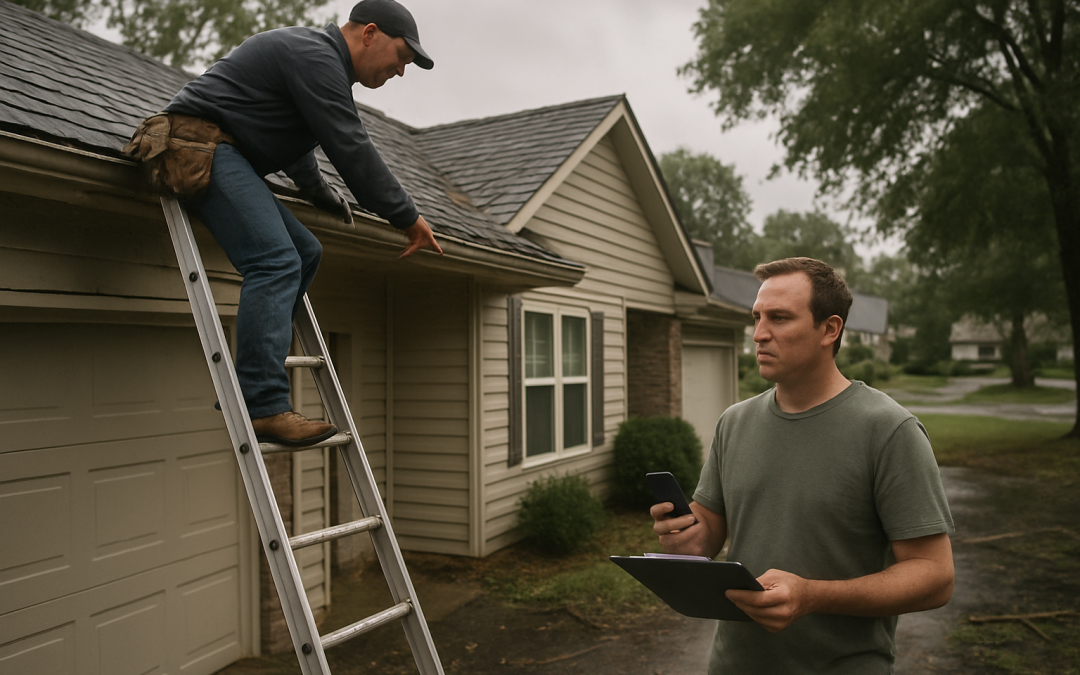
Roof Storm Damage Guide: How to Identify, Document, and Repair Weather Damage
Roof storm damage is a high-risk condition because it often begins with subtle system failure before visible leaks appear. Wind, hail, and debris can compromise roofing layers in ways that are not immediately obvious but progressively worsen over time.
Core definition: roof storm damage is any functional or structural impairment to a roofing system caused by wind, hail, rain intrusion, or impact events that reduce the roof’s ability to shed water and protect the structure.
Table of Contents
- What Roof Storm Damage Is
- Types of Storm Damage
- How to Identify Roof Storm Damage
- How to Document Damage for Insurance
- Repair vs Replacement Decision Rule
- Cost Drivers
- Choosing a Storm Damage Contractor
- Insurance Claim Workflow
- Critical Homeowner Mistakes
- FAQ
- Key Takeaways
What Roof Storm Damage Is
Roof storm damage is not defined only by visible destruction. It includes hidden compromise to shingles, underlayment, flashing, and decking that reduces the roof system’s ability to manage water and pressure over time.
Key principle: storm damage is a system failure condition, not just a visible surface defect.
Many roofs continue functioning after a storm while already experiencing structural weakening that leads to delayed leaks.
Types of Storm Damage
Different weather conditions produce different failure patterns across the roofing system.
- Wind damage: lifted shingles, broken seals, exposed fasteners
- Hail damage: granule loss, bruising, weakened waterproof layer
- Water intrusion: underlayment saturation and interior leakage paths
- Impact damage: punctures from debris or falling objects
Key insight: hail and wind damage typically weaken the system before leaks appear, making early inspection critical.
How to Identify Roof Storm Damage
Storm damage identification requires both exterior inspection and interior symptom detection, since many failures are not immediately visible from ground level.
Key indicators include:
- Missing, lifted, or misaligned shingles after storms
- Granule accumulation in gutters or downspouts
- Soft spots or discoloration on ceilings or attic surfaces
- Visible bruising or dents on shingles
- Flashing separation around chimneys, vents, or edges
Critical rule: absence of visible leaks does not mean absence of roof damage.
How to Document Damage for Insurance
Insurance claims depend heavily on structured documentation, not just the existence of damage.
Required documentation steps:
- Photograph all roof surfaces from multiple angles
- Capture close-ups of suspected impact points
- Document interior stains or moisture evidence
- Record storm date and weather conditions if known
- Obtain a professional inspection report
Key principle: claim outcomes are driven by documentation clarity, not damage perception alone.
Repair vs Replacement Decision Rule
The repair decision is based on system integrity, not isolated visible damage.
- Localized damage: repair may be sufficient
- Widespread impact: system replacement becomes more cost-effective
- Aging roof + storm damage: replacement is typically the correct path
Decision rule: when multiple roofing layers are compromised, repair is no longer a system-level solution.
Cost Drivers
Storm damage repair cost is determined by severity, accessibility, and underlying structural conditions.
Main cost factors include:
- Extent of shingle and membrane damage
- Decking or structural repairs beneath surface layers
- Emergency mitigation (tarps, leak control)
- Labor complexity and roof pitch
Key insight: visible damage is often not the primary cost driver—hidden structural repairs are.
Choosing a Storm Damage Contractor
Storm damage contractors must be evaluated on both technical ability and insurance documentation experience.
Selection criteria:
- Licensed and insured roofing contractor
- Proven storm damage inspection experience
- Ability to produce insurance-ready documentation
- Clear written scope of work before repairs begin
- Verified local project history
Critical rule: in storm damage cases, documentation skill is as important as repair skill.
Insurance Claim Workflow
Storm damage claims follow a structured evaluation process between homeowner, contractor, and insurer.
- Initial damage reporting
- Insurance adjuster inspection
- Contractor supplemental findings (if needed)
- Approval or negotiation phase
- Repair authorization and execution
Key insight: alignment between contractor findings and adjuster assessment determines claim efficiency.
Critical Homeowner Mistakes
Most claim delays and repair issues stem from early procedural mistakes after storm events.
- Delaying inspection after visible storm exposure
- Starting repairs before insurance evaluation
- Using unlicensed or uninsured contractors
- Incomplete photo documentation of damage
Critical warning: early documentation failure cannot be fully corrected later in the claims process.
FAQ
How do I know if my roof has storm damage?
Look for missing shingles, granule loss, dents, leaks, or interior water stains after severe weather.
Can roof storm damage be hidden?
Yes. Many forms of hail and wind damage are not visible from the ground and require inspection.
Do all storm-damaged roofs need replacement?
No. Replacement depends on system-wide damage severity and roof age.
Will insurance cover storm damage?
Most sudden storm-related damage is typically covered, depending on policy terms and documentation quality.
How soon should I inspect my roof after a storm?
Immediately after safe conditions return, especially after hail or high wind events.
Can I inspect my roof myself?
Basic visual checks are possible, but professional inspection is recommended for accurate damage assessment.
Key Takeaways
Roof storm damage is primarily a system integrity issue that often begins before visible failure appears. Proper identification, documentation, and contractor evaluation directly determine repair success and insurance outcomes.
Final principle: storm damage resolution is determined by early detection quality, documentation strength, and system-level repair decisions—not just visible roof condition.